Clobotics has been featured by Tech in Asia in a profile of how the company applies physical AI to two demanding operating environments: wind turbine maintenance and retail execution.
The original feature, “The startup putting robo-eyes on wind turbines and retail shelves,” connects work that can appear unrelated at first. A robot inspecting a turbine blade and a field representative photographing a store shelf both begin with the same problem: companies need reliable evidence from physical assets, but collecting and interpreting that evidence manually is slow, inconsistent, and difficult to scale.
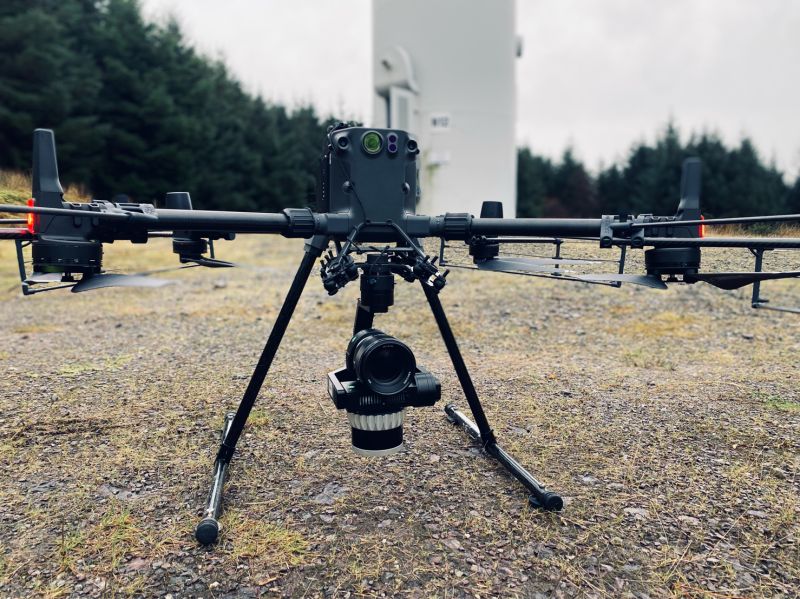
Clobotics addresses that problem by combining robotics, drones, computer vision, vision-language models, and cloud software. The machines and cameras collect field data; AI converts it into structured findings; and the platform helps teams decide what to inspect, repair, restock, or verify next.
Physical AI connects observation with action
Physical AI is most useful when it does more than detect an object. It must understand an operating environment, preserve evidence, and support a real workflow. Tech in Asia’s profile shows this pattern across both Clobotics business lines.
In wind energy, the platform captures blade-condition data and turns it into defect analysis and maintenance planning. In retail, it recognizes products and store conditions, then converts images into information about stock availability, share of shelf, pricing, promotions, and execution quality.
The common architecture is important. Robotics and cameras extend what teams can observe, while computer vision and AI make the resulting data consistent enough to compare across turbines, stores, regions, and time.
Wind turbine inspection robots: from data capture to repair
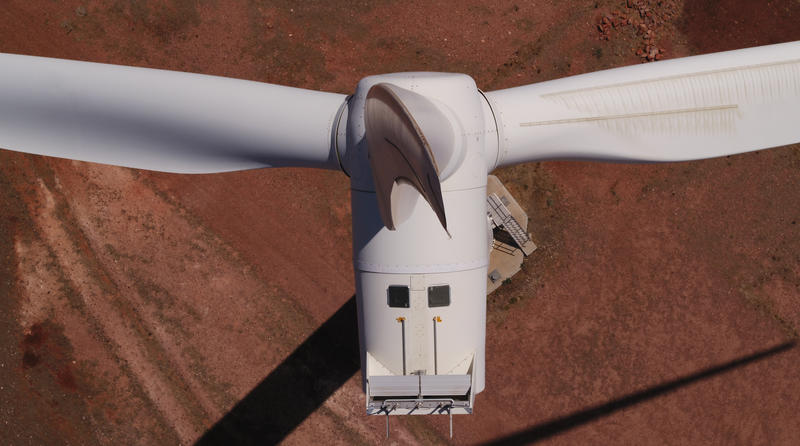
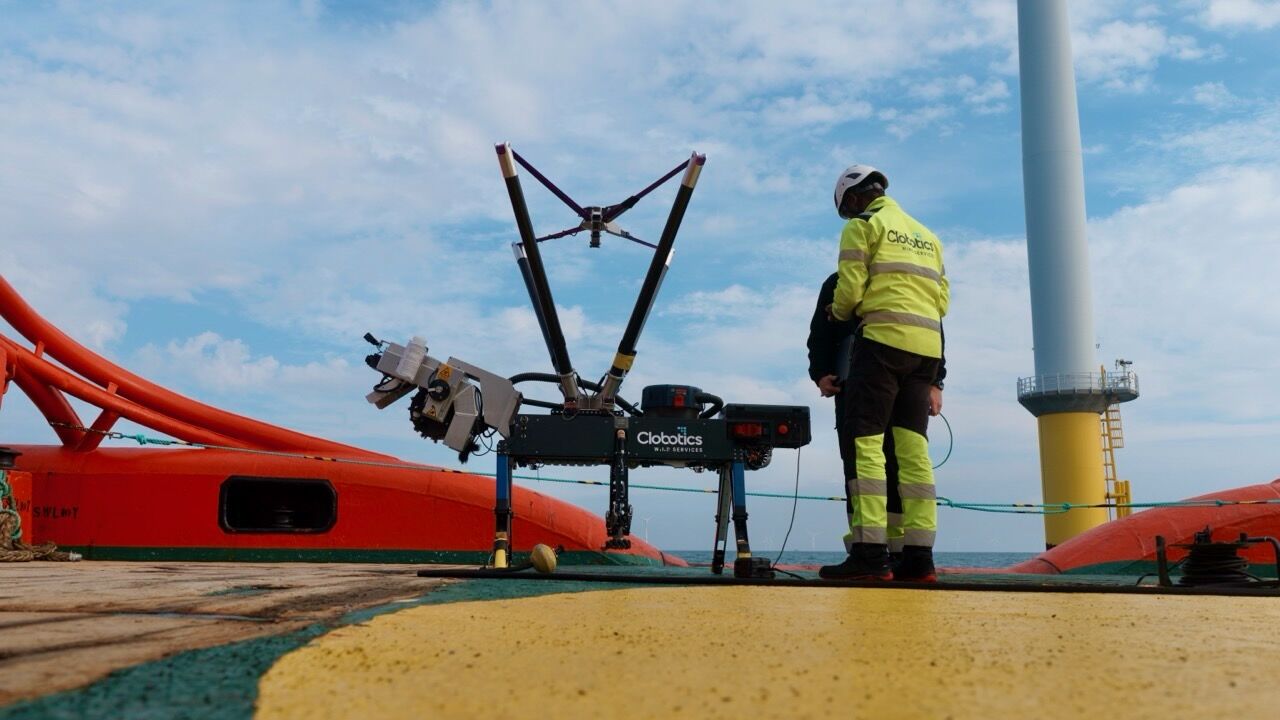
Tech in Asia highlights three Clobotics robotic systems for wind turbine inspection and maintenance. KIWI, a compact internal blade inspection robot, enters the blade to capture cracks and other defects using high-dynamic-range cameras and controlled LED lighting. External inspection systems collect repeatable visual evidence from the blade surface without requiring technicians to spend hours working at height.
The profile gives a clear indication of the operational scale. According to figures George Yan shared with Tech in Asia, Clobotics inspects approximately 60,000 to 70,000 wind turbines each year, equivalent to about 12% of the global installed fleet.
Speed is only part of the value. The robotic systems can also capture a broader and more consistent dataset than a person relying on binoculars or manually selected photographs. Clobotics’ cloud platform uses computer vision and a vision-language model to recognize defects, add context, monitor how damage changes over time, and support maintenance scheduling.
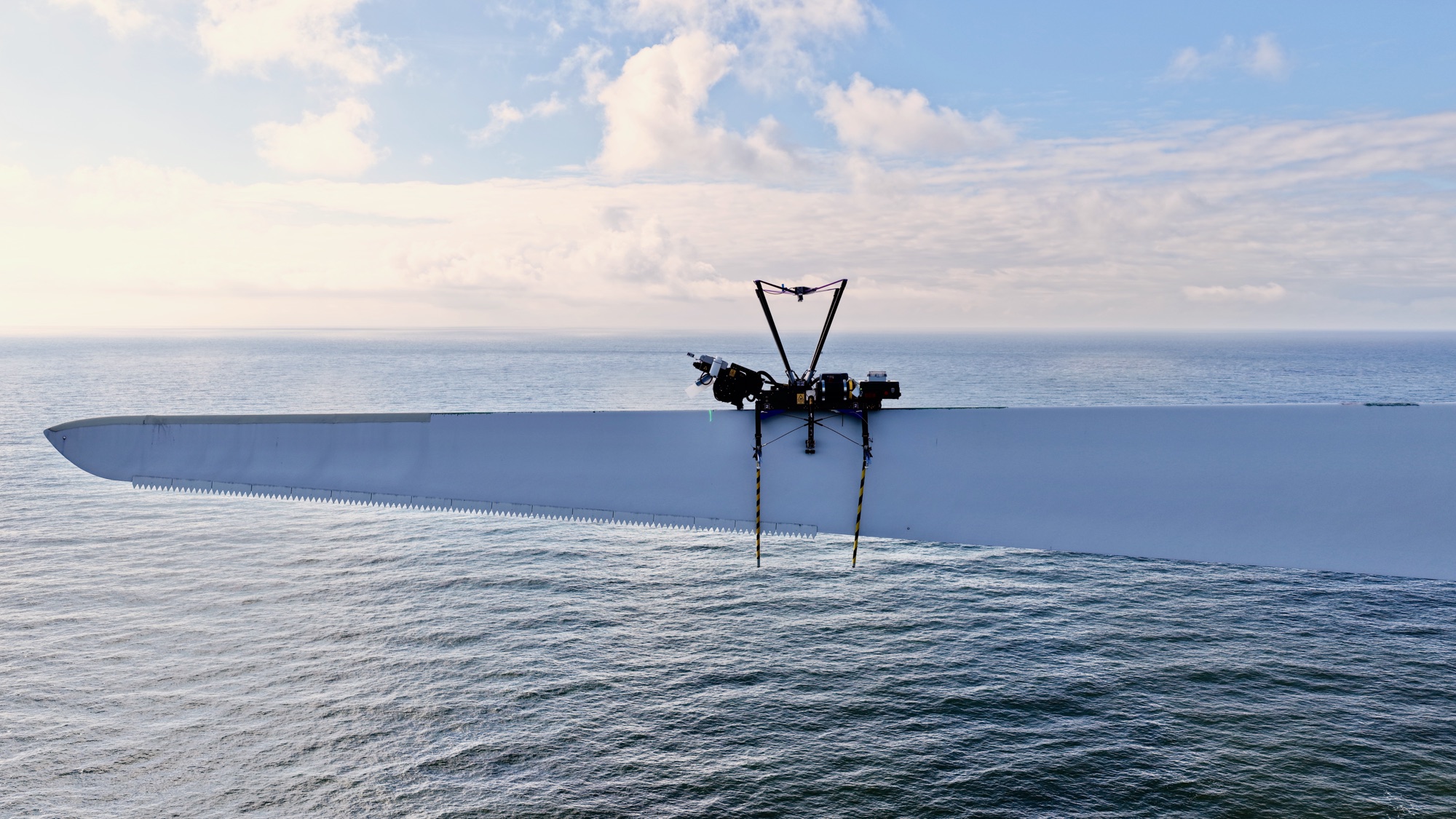
Tech in Asia also focuses on SPARROW, Clobotics’ drone-delivered robot for leading-edge blade repair. The drone places the robot precisely on the blade, where it applies a protective repair layer. Yan told the publication that the system can replace roughly 80% of the work normally completed by people in this repair process and operate about six times faster.
This progression—from automated inspection to robotic repair—is central to Clobotics’ approach. Inspection creates trusted evidence; analysis identifies the right intervention; and robotics helps carry out the work with less exposure to height, weather, and repetitive manual tasks.
Retail execution AI: turning shelf images into decisions
The same physical AI principle applies in stores. Brands often sell through thousands of outlets that they do not directly control, making it difficult to know whether products are available, correctly priced, well positioned, or supported by the right promotional material.
Clobotics’ retail execution AI uses store images captured by field teams or connected cameras. Retail product recognition identifies individual SKUs and reconstructs what is happening on the shelf. The platform then measures conditions such as on-shelf availability, out-of-stock rates, share of shelf, product placement, price compliance, and competitor activity.
This is a large-scale recognition problem. The Tech in Asia article notes that a global brand may need to manage more than 3,000 of its own SKUs while monitoring another 20,000 competing SKUs. Clobotics reported product recognition accuracy above 98% in the context discussed by the publication.

The value appears in the workflow, not only in model accuracy. Tech in Asia cites an example in which a major brand reduced the time needed to scan and document items during a store visit by 60% after adopting Clobotics’ image recognition and retail analytics technology.
Brand teams can use the resulting data to investigate where products repeatedly sell out, identify stores where a competitor is running a promotion, and focus field activity on locations that need intervention. This turns retail shelf image recognition from a reporting tool into a retail execution system.
Why data consistency matters as much as automation
The article describes Clobotics’ AI layer as a form of “WindGPT,” but the underlying concept applies beyond wind. A vision-language model helps interpret the visual evidence captured by robots and cameras, while the operating platform organizes that evidence around assets, locations, tasks, and changes over time.
For wind operators, consistent data makes it easier to compare damage across a fleet and prioritize blade maintenance. For retail and CPG teams, it makes store visits comparable and provides a shared record of what was actually present at the shelf.
In both cases, the system is designed to close the gap between observation and action. That is what distinguishes physical AI from a standalone image-recognition model: it is connected to the people, rules, and decisions that operate the physical business.
Singapore headquarters and global enterprise growth
Tech in Asia also examines Clobotics’ development as a Singapore-headquartered physical AI company. Founded in Shanghai and Seattle in 2017, the company later relocated its headquarters to Singapore as it expanded internationally.
The profile reports that Clobotics had raised more than US$80 million from investors including Granite Asia. At the time of the interview, the company planned to expand its Singapore team across engineering and customer success while continuing to invest in go-to-market capabilities and additional robots.
More than half of the company’s revenue came from outside China, according to Yan. Europe and Australia were identified as major wind-energy markets, while the United States and Asia Pacific were key retail markets. This international mix reflects the enterprise nature of Clobotics’ work: the technology must function across different climates, store formats, languages, field teams, and operating standards.
A shared intelligence layer for physical operations
The strongest idea in the Tech in Asia feature is not that Clobotics builds robots for two industries. It is that wind and retail share a deeper operational challenge.
Both industries depend on distributed physical assets. Both need more frequent, trustworthy evidence. And both benefit when visual data can be translated into a specific next action—repair this blade, revisit this store, correct this price, replenish this shelf, or investigate this exception.
Clobotics’ physical AI platform brings together data capture, computer vision, contextual analysis, and workflow execution so enterprise teams can manage those decisions at scale.
Read the full article on Tech in Asia.
This page is an original Clobotics summary of independent media coverage. Numerical statements and forward-looking plans are attributed to the Tech in Asia profile and the interview it contains. The full article and its editorial content are published by Tech in Asia.