
Choosing a retail execution partner is not just about finding the platform with the best demo. It is about deciding how store-level evidence will be captured, trusted, governed, and turned into action across markets.
Enterprise teams often compare familiar feature labels: image recognition, video capture, dashboards, APIs, and AI. These capabilities matter, but they do not answer the harder question: will the system still work when thousands of field reps use it in real stores, across different devices, changing SKUs, local price formats, unstable connectivity, and enterprise data rules?
The strongest retail execution partners do more than recognize products. They help businesses turn field evidence into reliable execution intelligence.
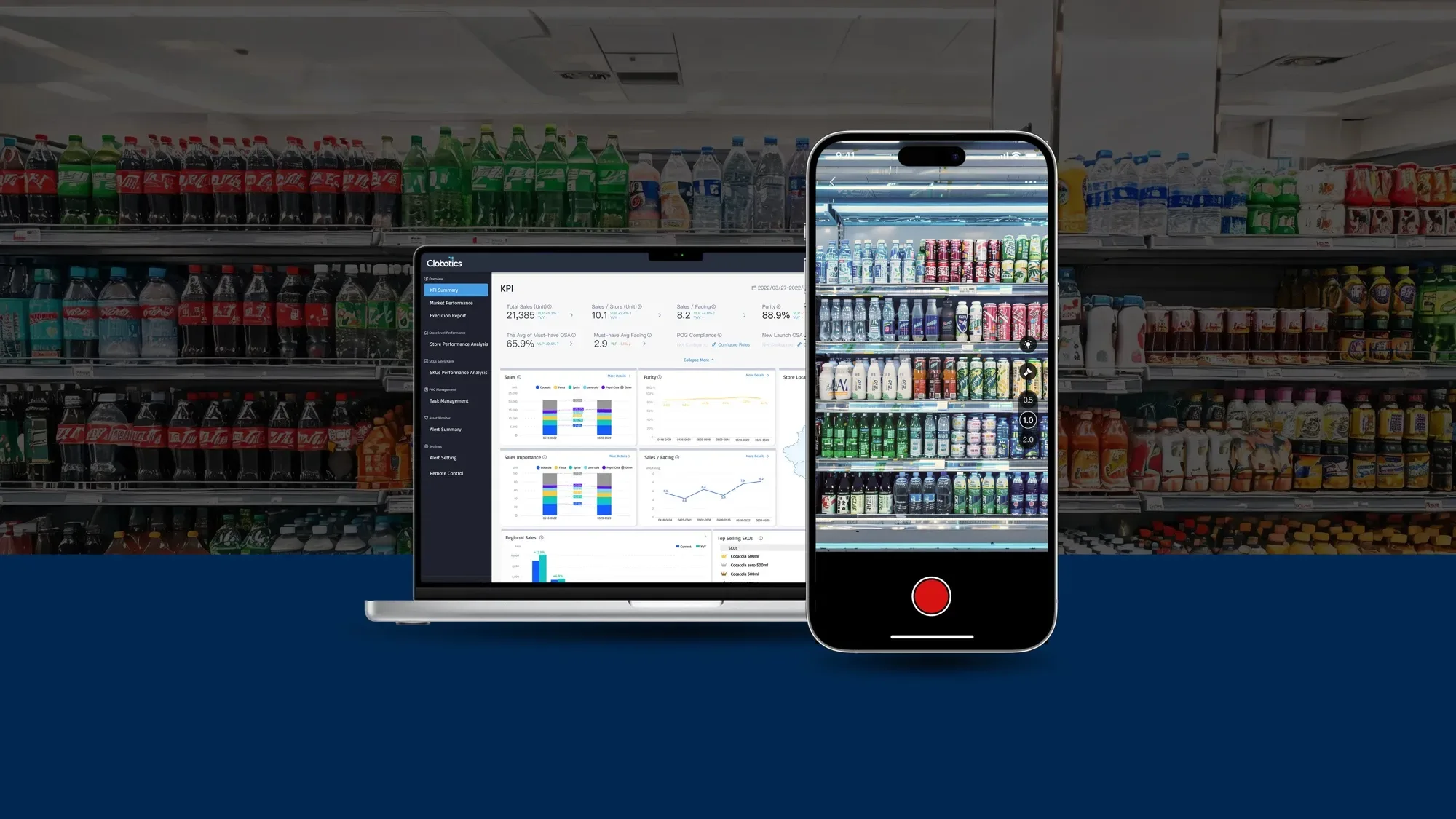
Retail execution software helps CPG brands, bottlers, and retailers collect store-level evidence, measure shelf and promotion performance, verify field activity, and turn each store visit into actions for frontline teams and headquarters.
Free Excel evaluation tool
Compare retail execution platforms with the same evidence and decision rules.
Compare up to three vendors across 10 practical decision dimensions, including field usability, capture coverage, recognition quality, evidence integrity, closed-loop action, integration, rollout, and total cost of ownership.
1. Start with the Business Problem, Not the Demo
A demo can show shelf recognition, promotion checks, planogram compliance, and dashboards. It cannot prove whether the platform solves the operating problem behind the project.
Before evaluating vendors, define what the business needs to improve: store visibility, visit integrity, execution compliance, trade promotion verification, field productivity, or outlet-level action guidance.
Different problems require different workflows. A team reducing manual reporting needs a different setup from a team validating incentives or creating next-best actions for sales representatives.
Good questions to ask
- Which store-level decisions should this system improve?
- Which workflows are currently too slow, manual, or hard to trust?
- Which KPIs need stronger evidence behind them?
- What action should happen after the system identifies an issue?
2. Field Usability Determines Whether the Platform Scales
Field teams decide quickly whether a system is useful. If the app slows down visits, creates too many retakes, fails on local devices, or behaves differently across markets, adoption problems will appear before headquarters sees value in a dashboard.
For regional rollouts, device and connectivity variation are not edge cases. Teams may use different Android devices, corporate iPhones, or offline capture workflows depending on the market.
Clobotics’ Retail Execution Assistant app supports iOS and Android, with integration options including SDKs, OpenAPI, and deep links for teams that need to connect field workflows with existing applications.
What to pressure-test: Ask vendors to show the workflow on the devices and network conditions your field teams actually use. A smooth desktop demo is not enough.
3. Choose the Capture Method Around the Shelf and the Data Required
There is no single best capture method for every retail execution task. The right choice depends on what the customer needs to measure, the size of the shelf or display, SKU density, the level of detail required, network conditions, and how the evidence will be reviewed after collection.
Still images can work well when the target area is compact or the task requires a small number of specific observations. For a long aisle, large cooler, or shelf containing many SKUs, video capture can be more efficient because a representative can record the full scene in one guided pass instead of stopping to take and verify multiple overlapping photos.
In Clobotics deployments, video-assisted collection has delivered 25–40% shorter collection time, 15–20% higher collection quality, and a 1–3% recognition accuracy gain. Results vary by category, shelf size, SKU mix, device, network, and workflow design, so these figures should be validated against the customer’s actual store conditions.
Video also introduces questions that buyers should examine early: upload volume, processing and storage cost, evidence completeness, and how a manager can find a specific shelf or product without watching an entire clip. Clobotics combines guided capture, processing, and structured outputs so video serves as an efficient collection method rather than becoming another unstructured media archive.
Questions worth asking: Which capture method is recommended for each store environment? How will the workflow change as shelf length and SKU density increase? Can managers trace a KPI back to the exact frame or shelf evidence that produced it?
4. Market Experience Matters Because Retail Detail Is Local
A system may work well in one country and struggle in another for reasons that are easy to underestimate. The issue is rarely just language translation. It is local retail reality: price labels, number formats, shelf conventions, handwritten marks, packaging variation, and the way store evidence is captured.
Even simple numeric interpretation can vary more than people expect. Different markets write and display figures differently. Decimal and thousand separators vary. Handwritten forms and local price tags follow habits that are not universal. Teams with shallow market experience often discover these issues after rollout, when correction becomes expensive.
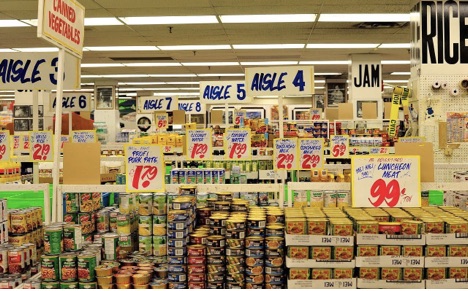
This is why regional deployment history matters. A vendor with deep multi-market exposure usually has stronger datasets, stronger exception handling, and fewer surprises when local variation appears.
Questions worth asking: In how many markets has the system been trained and deployed under live conditions? How does the vendor adapt when packaging, labeling, or shelf conventions differ by market?
5. Evaluate Shelf Complexity and Data Quality Together
Enterprise buyers should evaluate recognition against the retail details the business actually manages: SKUs, facings, linear space, prices, POSM, stacked items, multipacks, displays, expiry dates, planogram rules, competitors, and local packaging variants.
A single accuracy claim is not enough. The stronger proof is whether the model stays useful when packs change, tags are handwritten, categories are mixed, and store photos are imperfect.
The business does not run on recognition scores alone. It runs on whether leaders trust the evidence behind store-level KPIs. If a representative uploads duplicate content, incomplete shelf coverage, poor-quality images, old evidence, or a capture from the wrong location, the KPI is compromised before recognition begins.
A retail execution partner should have controls for submission quality, GPS validation, timestamp logic, duplicate detection, capture completeness, and exception handling. Clobotics supports configurable geolocation and geofencing detection, boundary-violation rules, alerting, and reporting. These controls matter because visit evidence may feed reporting, incentives, compliance, and corrective action.
Clobotics supports linear-space KPIs, share-of-shelf calculations, stacked and destacked facings, multipack recognition, orientation-specific outputs, price-tag detection and reading, POP recognition, Fresh Index date recognition, and planogram compliance checks at shelf, bay, row, and column level.
For typical cloud-based recognition, server-side processing for an image with about 80 facings can complete in under five seconds, excluding upload and download time.
The practical test: Can the vendor trace each KPI back to trusted evidence, and can the business explain why that evidence should be believed?
This relationship between evidence quality and business action is visible in Clobotics’ retail execution case study, where a leading global beverage brand used verified store-level data to expand managed outlet coverage and improve field execution across Southeast Asia.
For a more demanding recognition example, review the pharmaceutical retail execution case study. The live China program covers 482 SKUs and 274 POSM types across OTC pharmacies and HPC retail. It reduced the complete store visit time by 60%, achieved 95%+ AI recognition accuracy, and exceeded 99% final accuracy after exception review. These results show why buyers should test the complete operating workflow—not only a model accuracy claim.
6. Master Data Is Where Many Programs Quietly Fail
Many pilots look successful because the environment is temporarily controlled. Fast-moving retail, however, is defined by constant change.
New SKUs launch. Packs change. Promotions shift. Store masters are inconsistent. Regional teams use slightly different naming conventions. If the platform cannot absorb those changes cleanly, the business ends up spending too much time maintaining the system instead of using it.
Buyers should look closely at how a platform handles:
- new SKU registration
- new market onboarding
- field discovery of unknown products
- product clustering and review
- recurring model updates
The fastest path to enterprise-scale retail execution is usually not asking customers to clean every record themselves. It is combining customer master data with field discovery, AI-assisted registration, and disciplined update workflows that keep the system commercially relevant over time.
7. Enterprise Readiness Means More Than a Dashboard
Retail execution data rarely stays inside one dashboard. It needs to feed planning tools, incentive programs, master data environments, CRM systems, sales systems, BI tools, and sometimes retailer-specific workflows.
Executive teams should assume that a successful rollout will require multiple forms of delivery, including:
- API-based delivery for operational systems
- structured exports for data teams
- dashboard views for business users
- file-based integrations where direct enterprise integration is not practical
Clobotics supports exports including CSV, JSON, XML, and Parquet, along with delivery through APIs, file services, portals, and BI tools. That flexibility is not a technical side note. It is what lets a retail execution platform fit into the reality of a large organization instead of becoming another silo.
8. Clarify Data Ownership, Security, and Commercial Fit Early
Store images, visit evidence, captured prices, promotion records, and derived KPIs can become part of a company’s operating record. Ownership and access should therefore be agreed before a pilot expands into a multi-market program.
Clobotics customers retain ownership of their original data. Depending on the deployment, raw and processed outputs can be made available through cloud storage, delivery APIs, structured files, portals, and BI tools. Enterprise controls can include role-based access and tenant isolation so access can be managed by role, market, or business unit.
Commercial structure matters because the wrong model can discourage field teams from collecting complete evidence. Buyers should understand how app access, users, visits, image or video volume, processing, storage, integrations, and advanced functions affect cost. Clobotics structures enterprise pricing around deployment scope, expected usage, and required capabilities; the final model is customized to the operating program rather than presented as one universal public rate.
Questions worth asking
- Who owns the original evidence, processed outputs, and derived KPIs?
- How can the customer retrieve raw and processed data during and after the engagement?
- How is access separated across markets, roles, and business units?
- Which capture, processing, storage, integration, and support services are included?
- Does the pricing structure make the total budget predictable as store coverage grows?
- Could the commercial model discourage representatives from collecting complete evidence?
Proof Should Come From Live Deployment, Not Demo Claims
In a Clobotics retail execution case study with a leading global beverage brand in Southeast Asia, the program expanded managed outlet coverage by 150%, reduced cost per store visit by 94%, and helped the business reach 10% revenue growth after five consecutive flat years.
The results did not come from image recognition alone. The program connected verified field evidence, store-level priorities, management visibility, and frontline action across a large outlet network. That is the kind of proof enterprise buyers should request: evidence that the platform can support live field conditions, changing master data, operational controls, and measurable business outcomes at scale.
Final Thought
Retail execution will keep getting more data-rich, but data volume alone will not create operational advantage.
The winners will be the teams that treat digitization as an operating model redesign: better evidence capture, stronger data quality, localized workflows, reliable master data, flexible integrations, secure governance, and faster action after every store visit.
Enterprise-scale retail execution intelligence is not about seeing more pictures. It is about helping the organization trust what it sees, understand what matters, and act before the opportunity passes.
Start with the retail execution platform scorecard, explore the Clobotics retail execution platform, or contact our team to discuss the capture, data, integration, and deployment requirements for your markets.