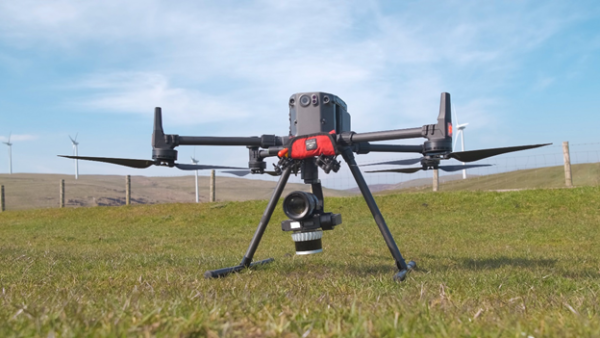
At the 6th Annual Global Wind Turbine Onshore O&M and Lifecycle Management Forum in Barcelona, Clobotics shared the story behind Sparrow and the field problem it was built to solve: wind turbine blade repair.
For decades, wind turbine blade repair has relied on skilled technicians working manually at height. This means long summer days repairing blades by hand: twelve-hour shifts, full protective suits, fiberglass dust, heat, and sweat.
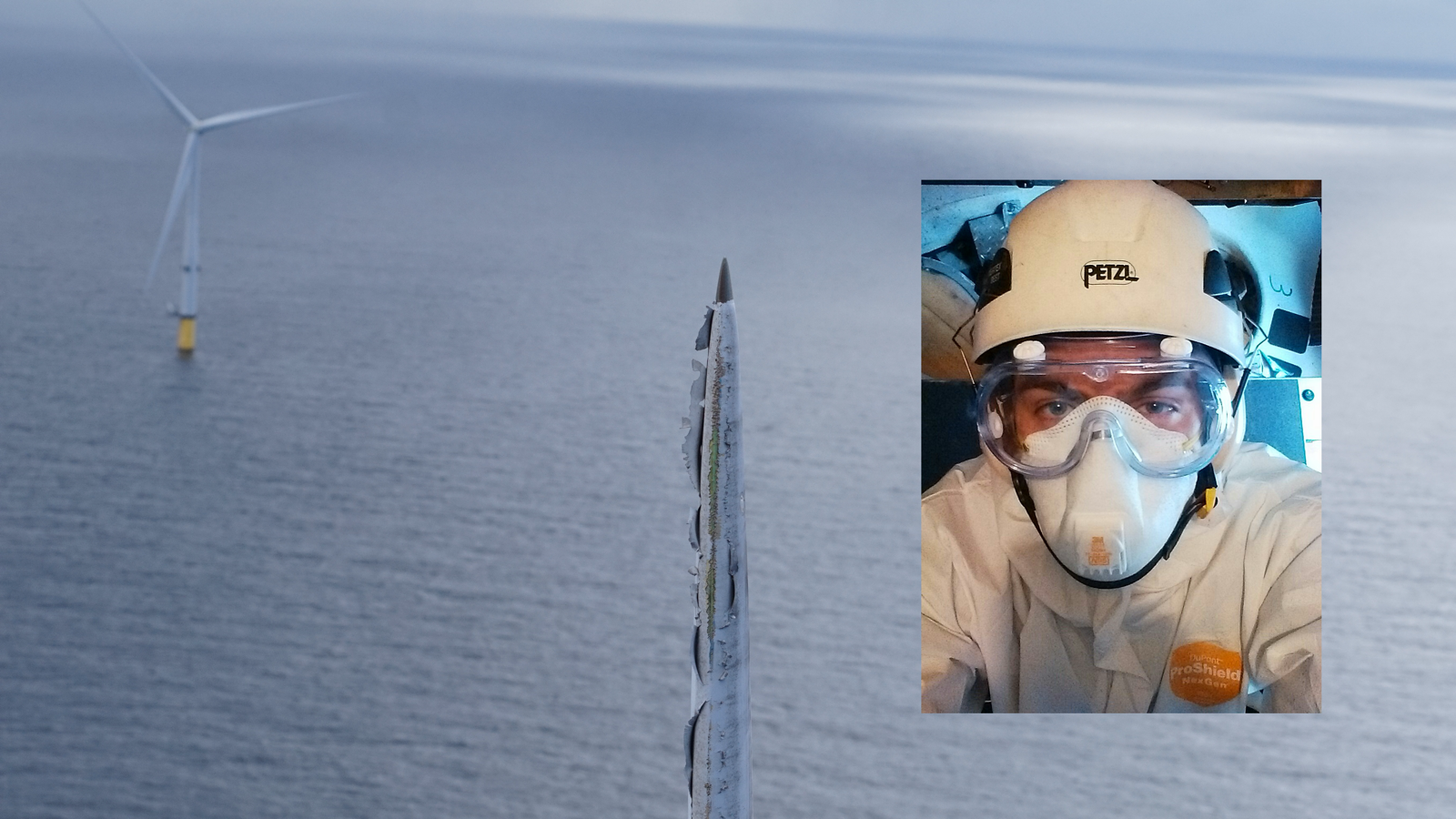
It is a craft that has kept wind farms operating around the world, but it also comes with familiar challenges. Repairs are labour-intensive, weather-dependent, and increasingly difficult to scale as turbines become larger and fleets continue to grow. At the same time, operators are under pressure to extend asset lifetime, reduce downtime, and complete maintenance campaigns within increasingly narrow weather windows.
Clobotics’ solution to this problem is a drone-delivered leading-edge repair robot called Sparrow. Sparrow makes one of wind O&M’s most repetitive and physically demanding jobs safer, more consistent, and easier to scale.
The problem Sparrow was built for
Wind turbine blades are getting longer. Turbines are getting larger. Wind farms are expanding. But the reality of blade repair has not become easier. One of the most persistent problems is leading-edge erosion. Over years of operation, blade surfaces meet rain, dust, salt, insects, and other airborne particles at high speed. The damage often starts small, but if it is left unrepaired, it can become deeper, more extensive, and more expensive to fix.
Traditional leading-edge protection repair is repetitive, weather-dependent, difficult to schedule, and often performed by technicians working from ropes or suspended platforms. A single blade can take much of a day. For a growing fleet, that does not scale easily. From the beginning, the Sparrow team was focused on building a better tool for the job.
Starting with requirements, not a product idea
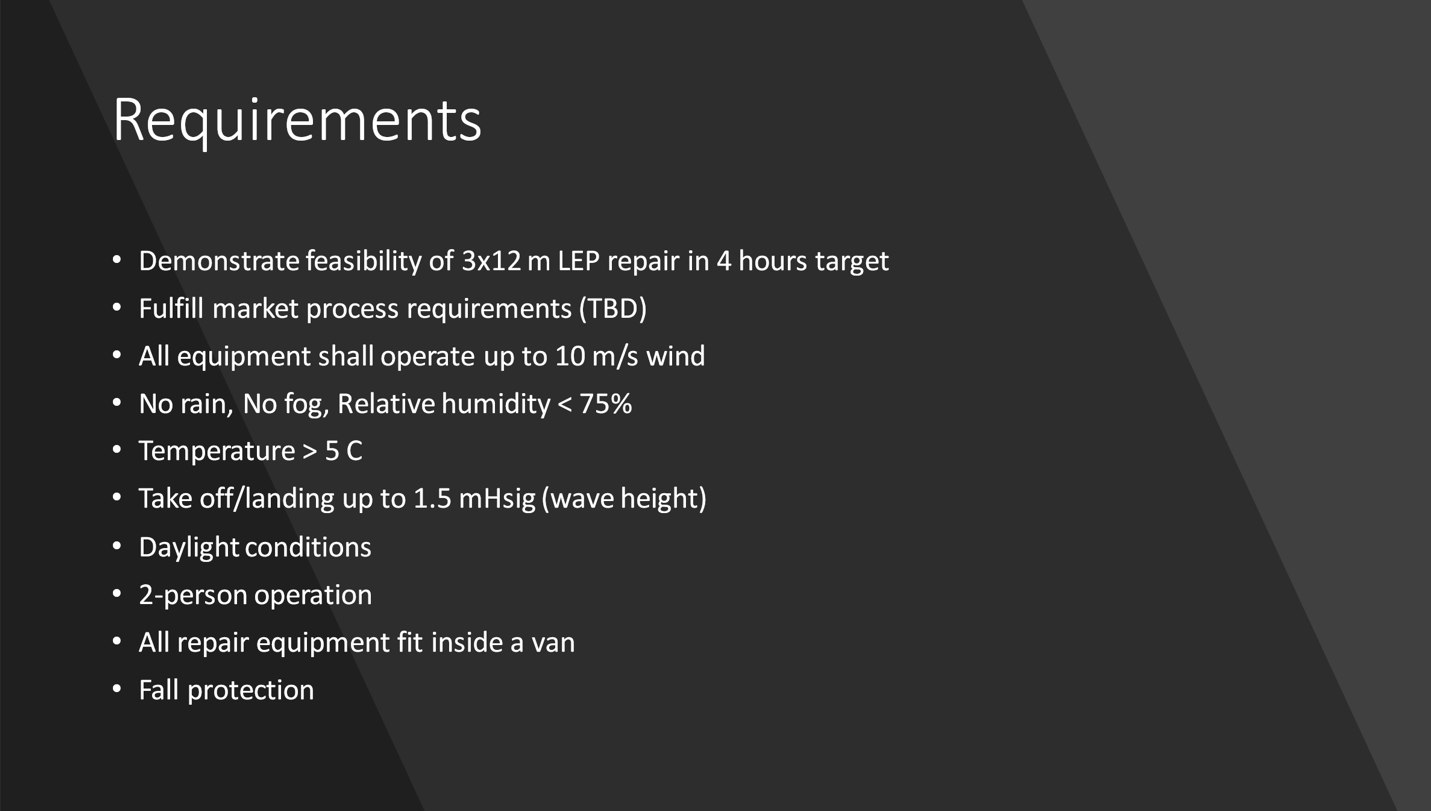
Sparrow began in 2021 with a requirements list and a practical question: “What must this system achieve in the field?” That meant considering the full repair environment: the turbine, the blade, the robot, the repair tooling, the drone delivery system, the operators, the vessel, the weather window, and the need for repeatable quality.
One early decision was simple but important: position the blade horizontally, with the leading edge facing upward. In other words, work with gravity, not against it. That one choice simplified many of the problems that followed. It gave the robot a more stable repair environment and made the repair process more controllable.
Learning the hard way
The first ideas were rough. Some worked. Some failed. Some looked strange. The team first explored direct deployment of the robot onto the blade. It was possible, but the landing was rough and required the drone to fly very close to the blade.
Then they tried tethering the robot to the drone. That changed the system. Landing became smoother, more controllable, and ultimately became the approach the team built around.
The early drone tests were also instructive. At first, the team experimented with DIY heavy-lift drones. The lesson was clear: heavy-lift aviation was not the problem Clobotics needed to solve. Reliable commercial heavy-lift drones already existed. The real engineering challenge was the robot and the repair workflow, so that is where the team focused.
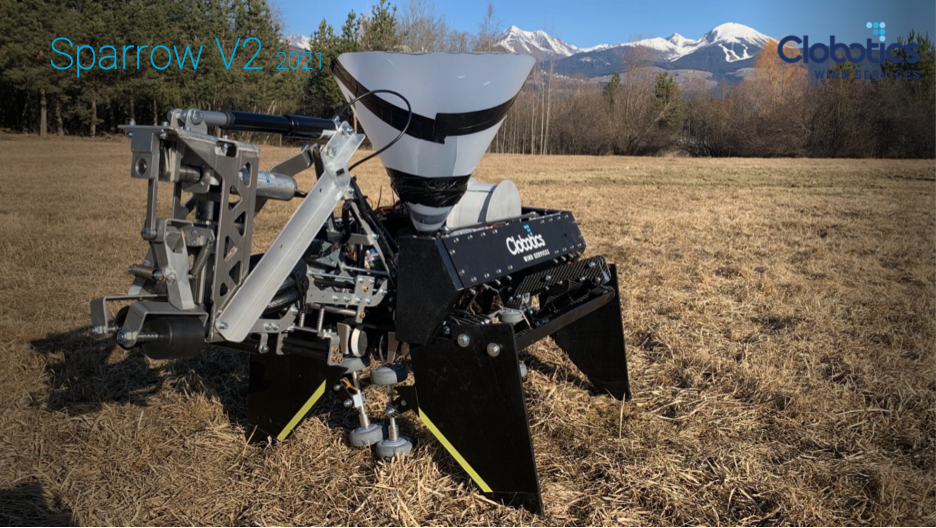
Sparrow V1 was a skeleton. V2 brought power, motion, and the first real repair tooling. By 2022, the team reached a defining milestone: using a drone to land a repair robot on a real blade. That was the moment the concept stopped feeling theoretical.
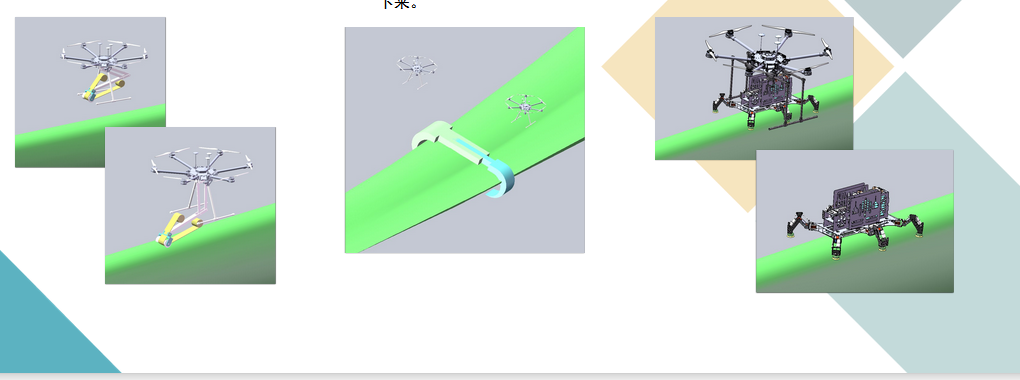
From prototype to field-ready system
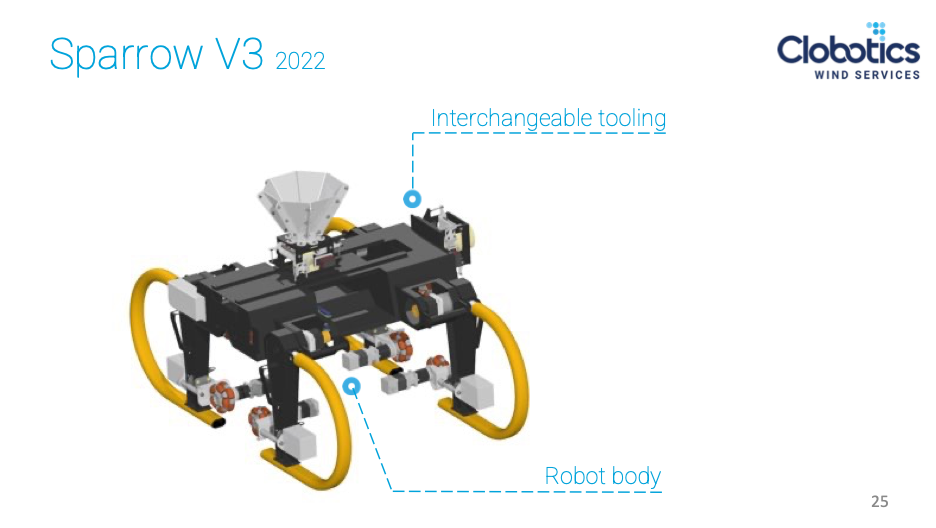
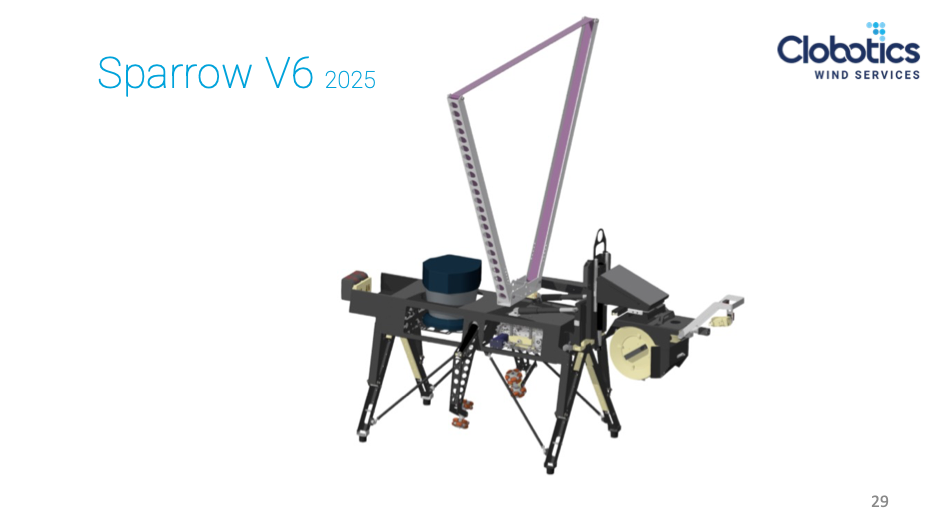
Over the following versions, Sparrow became stronger, more stable, and more suited to real operating conditions. V3 added robustness and interchangeable tooling. V4 and V5 focused on field readiness: blade protection, adjustable legs, drone attachment, fail-safe systems, exterior motors, and durability. By V6 and V6.1, the robot body had largely converged, and the team focused on making deployment safer and more reliable, especially for offshore operation.
The yoghurt detail
Some of the development was less glamorous. When the team was developing the material dispenser, they needed a safe and repeatable way to simulate different material behaviours. The answer, unexpectedly, was yoghurt.
In early testing, lead engineer Lennart used Skyr, an Icelandic yoghurt, in the dispenser. It is a small detail, but it demonstrates how Sparrow was built through constant testing, learning, and testing again.
Modular tooling, traceable repair
Sparrow is designed as a platform, not a single fixed tool. Its modular tooling approach allows the system to adapt as repair materials, processes, and field requirements evolve. Current workflows include sanding and cleaning, followed by leading-edge protection application and quality checks.
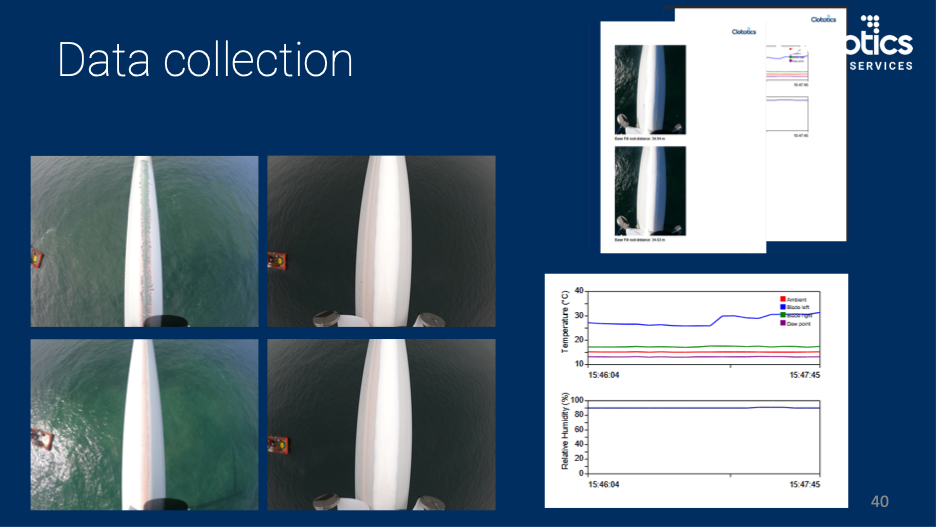
These are exactly the kinds of tasks that are repetitive and physically punishing in manual repair. With Sparrow, leading-edge repair is more consistent, controlled, and repeatable. In addition, every step is documented automatically for traceability: what work was performed and under what conditions.
Designed by operators, operated by designers
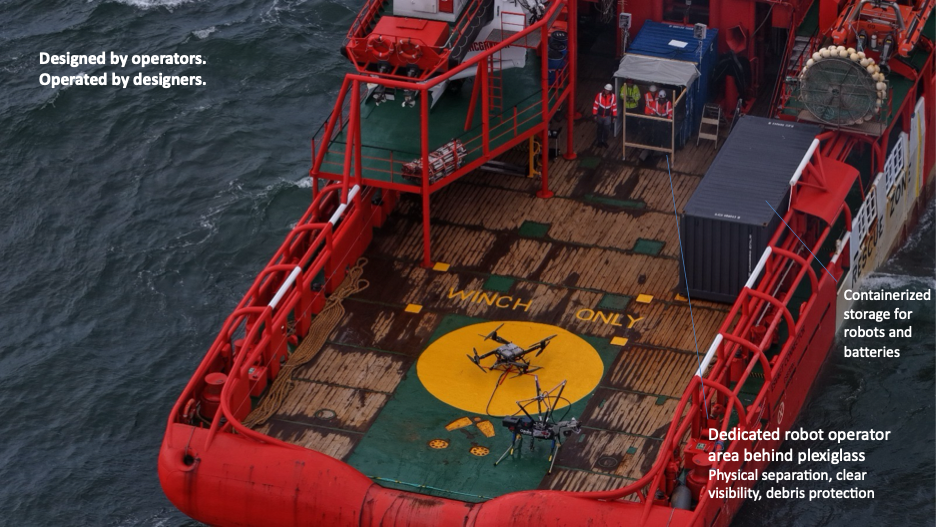
One of the strongest ideas behind Sparrow is this: the people who design the system also operate it offshore. That creates a very direct feedback loop. If something is awkward, unsafe, or slow, the team feels it immediately. And then they fix it.
In offshore operation, the setup includes a dedicated robot operator area behind plexiglass, containerized storage for robots and batteries, pilots, robot operators, technicians, and a crew lead. The system is designed to be lean and repeatable on an active vessel.
Not replacing technicians, giving them better tools
Sparrow is not about removing people from blade repair. It is about moving people away from the most punishing parts of the work. Less rope access time. Fewer people exposed to difficult conditions. More consistent surface preparation. More controlled application. Full process traceability.
Sparrow has now completed an offshore blade repair in 27 minutes and can repair up to eight blades in one day under suitable operating conditions. A typical workflow can include mobilizing to the blade, sanding and cleaning, changing the robot setup, applying leading-edge protection, quality checks, and retrieving the robot.
That changes how teams can use weather windows. It also changes how repair work can scale.
The road ahead
Clobotics is continuing to develop Sparrow as a platform. The larger vision is clear: wind operations and maintenance will increasingly involve technicians working side by side with robots. Not as a distant future, but as a practical response to a real problem.
The Sparrow story brings to mind a line from the Spanish poet Antonio Machado:
“Traveler, there is no path. The path is made by walking.”
For Sparrow, that path has been made through rough prototypes, field tests, failed ideas, offshore campaigns, and a belief that blade repair can be safer, more consistent, and more scalable. Step by step, Clobotics is helping make that future real.