Executive summary
Less time documenting the store. More reliable evidence for action.
A global consumer goods company needed to inspect complex shelves, secondary displays, prices, promotional materials, and packaging changes without adding more work to every store visit. Clobotics introduced a video-led retail execution workflow that simplified capture, checked evidence quality before upload, and translated visual observations into customer-specific compliance results.
The business challenge
A complete store visit had become a collection exercise
Large consumer portfolios create more than a recognition problem. A representative may need to document a long main shelf, several displays, price signs, promotional materials, competitor activity, and new packaging during the same visit. Each KPI can require a different angle or level of detail.
With a photo-heavy workflow, the field team had to stop repeatedly, frame every section, check whether the image was usable, and retake incomplete coverage. Long shelves could require dozens of images. Narrow aisles and crowded displays made consistent capture even harder.
The company therefore faced three connected risks:
Store visits took too long
More KPIs meant more photos, more capture steps, and less time for the representative to correct execution while still in the store.
Poor evidence weakened the result
Blur, missing shelf sections, distance, glare, and incomplete displays could compromise the audit before recognition even began.
One score could not represent every rule
Product presence alone did not confirm the right facings, sequence, shelf share, price, display type, campaign material, or pack version.
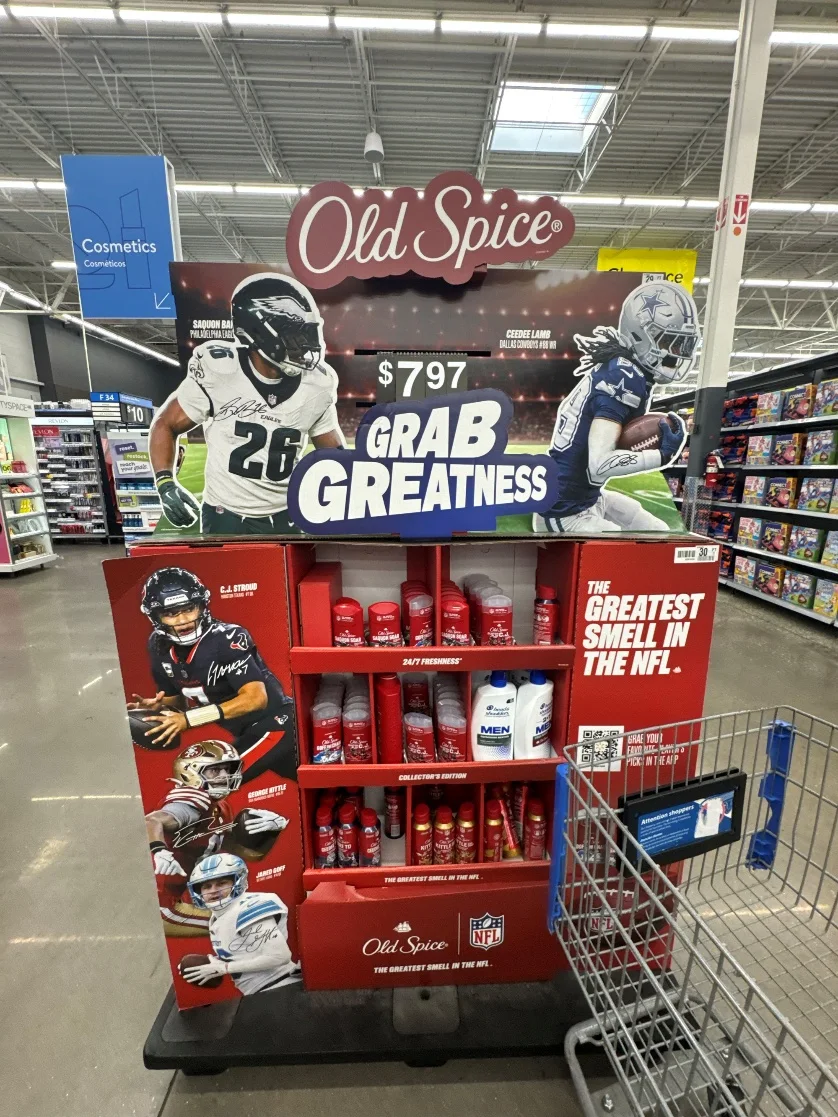
Presence is only the first question.
The business also needs to know whether the display is the right type, carries the required products, uses the correct price and campaign material, and appears in the intended location.
The operational goal is not to collect more images. It is to return a trustworthy answer while the team can still improve the store.
The Clobotics solution
Replace repeated photography with one guided capture flow
Clobotics allowed representatives to record a shelf or target area as a continuous video. On the device, the system converted the footage into selected, analyzable two-dimensional images and checked capture quality before upload. Using the relevant frames as the analysis record reduced the need to store and transfer the complete raw video while preserving the visual evidence needed to locate products and reconstruct the shelf.
With connectivity, the selected images were sent to the cloud for computer-vision analysis. The platform located products, evaluated their shelf and display context, applied the customer’s execution rules, and returned specific feedback to the field application in near real time. The representative could then correct missing products, facings, placement, price, or campaign execution before leaving the store.
If connectivity was unavailable, video capture and image preparation could continue on the device. The evidence was queued for cloud analysis when the connection returned, avoiding a repeated visit simply because the store had poor signal.
The workflow supported structured guidance for repeatable tasks and free-style video for partial shelves, target displays, and narrow aisles. For some environments, capture could be completed with approximately 40 centimeters of working distance.
Scan the shelf in one continuous motion.
The guided capture experience helps a representative cover the full shelf without stopping to compose dozens of individual photos.
- Capture guidance keeps the phone at a usable distance and pace.
- The recording is converted into selected images for analysis.
- The completed shelf record can be reviewed before submission.
Turn the same evidence into multiple execution decisions
The value of the workflow was not the video itself. It was the ability to use one verified store record across several retail execution questions.
Record one continuous view
Guided or free-style video covered long shelves, partial bays, secondary displays, and campaign areas with fewer interruptions.
Turn video into useful images
The device selected analyzable two-dimensional frames, checked their quality, and prepared compact evidence for storage and upload.
Find products in the cloud
Cloud computer vision located SKUs and evaluated facings, display area, prices, POSM, packaging, and spatial relationships.
Return feedback to the field
Customer-specific rules turned the analysis into corrective actions that representatives could complete during the same visit.
From recognition to merchandising compliance
The system evaluates how products are executed, not only whether they are visible
For a single product family, compliance might require several conditions at once: the range must be present, products must follow a specified vertical or color-block arrangement, shelf share must meet a threshold, and priority packs must reach a minimum number of facings.
Clobotics translated those standards into configurable rules and returned the result in language the field team could act on. A failed check therefore showed which requirement was missed, rather than producing a generic non-compliance score.
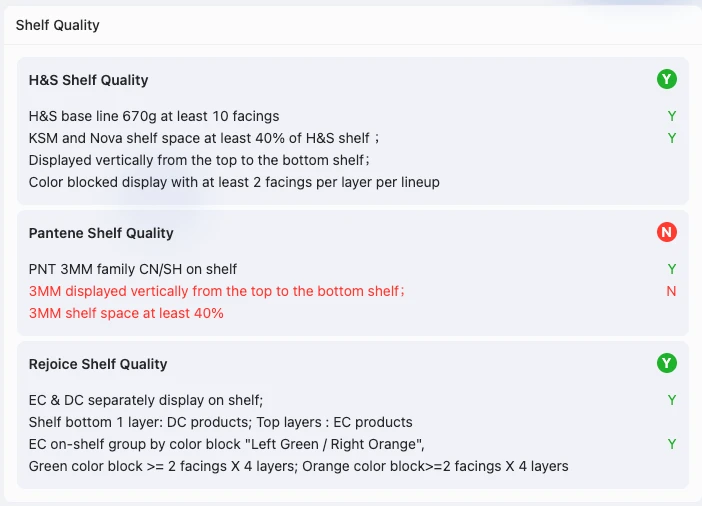
Show the representative what to correct—not only a score.
The selected shelf images were analyzed in the cloud and returned as individual pass-or-fail checks. A representative could see whether the problem was product presence, facings, shelf share, sequence, or arrangement and make the relevant adjustment while the visit was still active.
- Selected images reduced unnecessary video storage and transfer.
- SKU-level recognition located the relevant items within the shelf.
- Rule-level feedback translated recognition into a clear field action.
Managing campaigns and product change
Retail execution rules have to change as quickly as the market
The same operating model extended beyond the main shelf. It could classify display formats such as endcaps, side wings, pallets, freestanding units, and checkout displays; connect a visible price to the relevant product; and verify promotional material through shape, pattern, and text.
For time-sensitive POSM, the workflow supported new recognition launches within three days. Packaging transitions could be tracked with temporary identifiers for old and new packs, then returned to standard UPC-level reporting once the transition ended. This allowed commercial teams to monitor a launch or pack change without permanently fragmenting master data.
The result was one execution layer for recurring shelf standards and short-lived commercial activity: product presence, facings, shelf share, price, display, POSM, competitor context, and packaging change could be evaluated from the same field workflow.
Adoption and results
The change worked because the field experience became simpler
The video workflow launched in the United States in August 2025. Within three months, 60% of the targeted workflow had converted to video, ahead of plan. Feedback from field agents and auditors was positive, and the transition did not disrupt ongoing operations.
In-store collection time fell by one-third. The recognition pass rate improved by 5-10%, while total fieldwork cost fell by 25%. The program reduced the effort required to produce usable evidence without weakening the range of KPIs the business could measure.
Fewer capture steps
Representatives spent less time assembling a photo set and had more opportunity to address execution issues during the visit.
More usable evidence
Quality checks moved closer to the moment of capture, reducing the risk of incomplete visits reaching downstream reporting.
One record, multiple KPIs
Shelf, display, promotion, price, and packaging questions could be evaluated through one connected workflow.
Change without disruption
Video adoption grew quickly while total fieldwork cost fell by 25% and operating continuity was maintained.
Retail evidence became faster to collect and more useful to the business.
The company reduced the burden of documenting complex stores while preserving the detail needed to evaluate product, shelf, display, price, promotion, and packaging execution.
What other consumer brands can learn
Do not optimize recognition in isolation. A more accurate model does not help if the field team cannot collect complete evidence efficiently.
Match capture to the store. Still images remain useful for compact tasks. Video is better suited to long shelves, dense assortments, multiple displays, and visits that evaluate several KPIs.
Make business rules part of the solution. The system should explain which execution requirement failed and what the representative needs to correct.
Design for constant change. New packs, seasonal displays, retailer-specific formats, and promotional materials are normal operating conditions, not exceptions.
Frequently asked questions
How can video capture make retail execution audits faster?
A field representative can record a shelf or display in one continuous motion instead of stopping to frame many separate photos. Clobotics converts the video into selected analyzable images on the device, uploads those images for cloud analysis, and returns structured feedback while the representative can still act in the store.
How does Clobotics turn retail video into actionable shelf results?
The field application converts continuous video into selected two-dimensional images, checks their quality, and sends the useful evidence to the cloud instead of treating the full recording as the final analysis format. Cloud computer vision locates products and evaluates execution rules before returning specific corrective feedback to the field worker.
What retail execution KPIs can be measured from store images and video?
The workflow can evaluate product presence, facings, shelf share, arrangement, display type, promotional material, price-product relationships, packaging versions, and customer-specific merchandising rules.
What results did the customer achieve?
In-store evidence collection became 33% faster, recognition pass rates improved by 5-10%, and total fieldwork cost fell by 25%. Within three months, 60% of the targeted workflow had converted to video.
About Clobotics
Clobotics helps consumer brands improve retail execution through structured image and video capture, computer vision, evidence-quality controls, customer-specific business rules, analytics, and human exception handling.
Explore Clobotics retail solutions or talk to our team about reducing field workload while improving store-level visibility.