
Clobotics completed an autonomous wind turbine blade inspection in 20 minutes, earning full marks for operational efficiency at an August 2026 field trial in Dawu, Hubei Province. In a separate demonstration that afternoon, Clobotics was the only team to successfully measure electrical resistance at a blade lightning receptor.
The inaugural event was co-organized by the China General Certification Center and DJI and hosted by CGN’s Hubei renewable energy investment company at the Wangjiashan Wind Farm. It was China’s first industry field trial of its kind using in-service turbines. Teams worked under the same test conditions and scoring rules across three turbines. Judges assessed operational efficiency, automation, safety, defect detection, reporting, cost-effectiveness, and suitability for different operating scenarios.
A 20-minute inspection with no repeat flights
In the morning trial, teams inspected a turbine with its rotor stopped and locked in a standardized position. Judges assessed the full workflow, from unpacking and configuring equipment to takeoff, inspection, landing, and recovery. Clobotics’ drone inspected the blades and returned to land autonomously, with no manual intervention in flight.
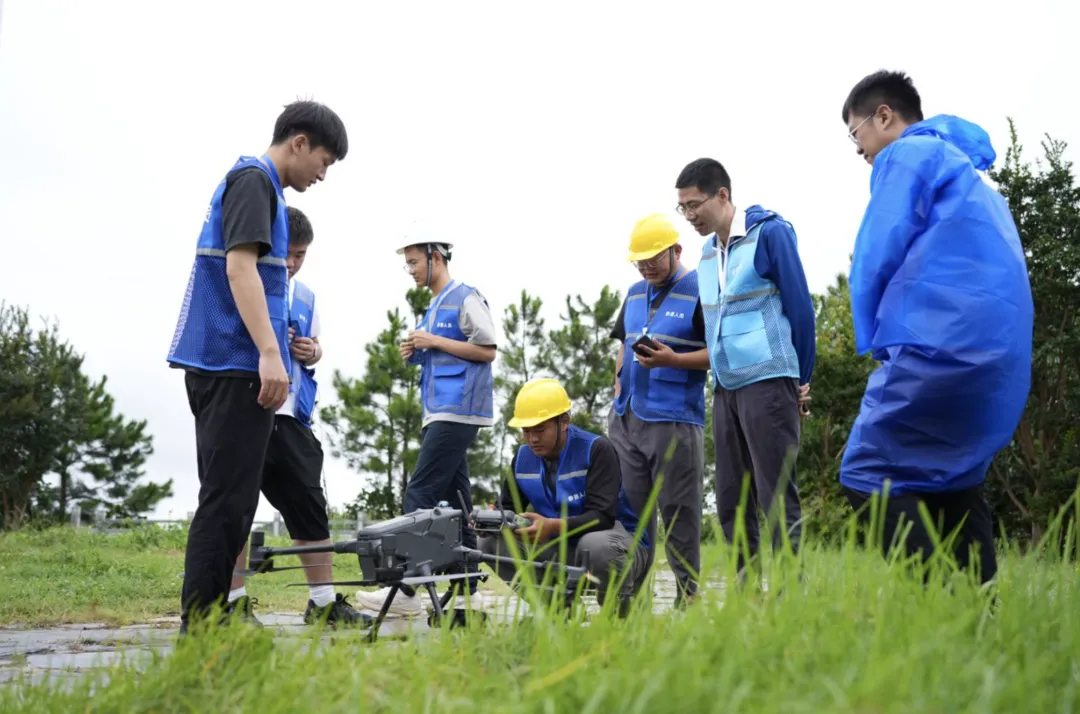
The drone inspection field trial at the Wangjiashan Wind Farm.
Clobotics completed the full workflow in 20 minutes. It was the only team in its group to complete a fully automated inspection without a repeat flight and received the maximum score for operational efficiency.
The only successful resistance measurement
The afternoon demonstration focused on testing electrical continuity through a blade’s lightning protection system at the receptor. The result helps operators assess whether the blade’s lightning protection path is intact.
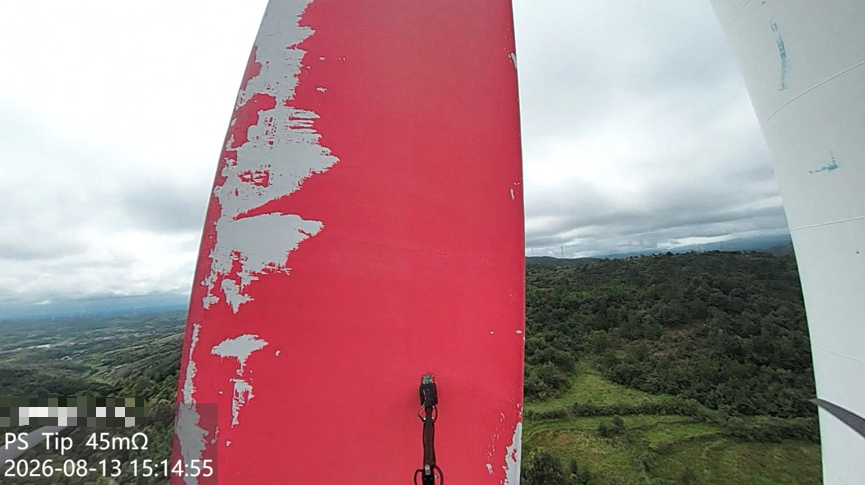
Live footage from the Hummingbird test shows a blade-tip resistance reading of 45 mΩ.
Strong winds made the demonstration more challenging for drone operations. Using Hummingbird, a drone-based system Clobotics had previously deployed in difficult field conditions, the team was the only participant to record a blade receptor resistance measurement during the demonstration.
Connecting inspection data across the blade lifecycle
After the trial, Clobotics’ field service engineers briefed wind asset owners and technical experts from power generation groups on its autonomous drone inspection and Hummingbird resistance testing workflows.
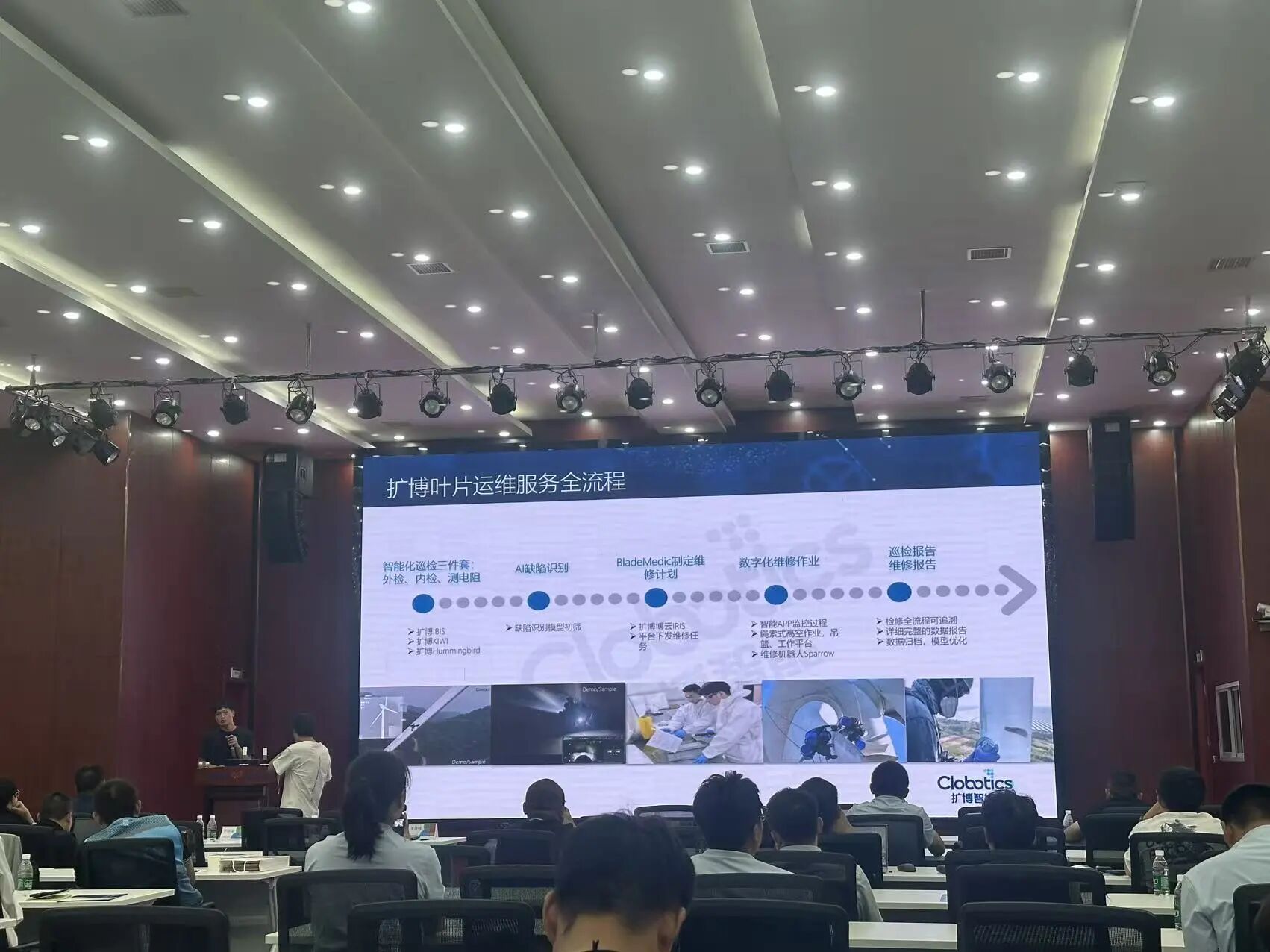
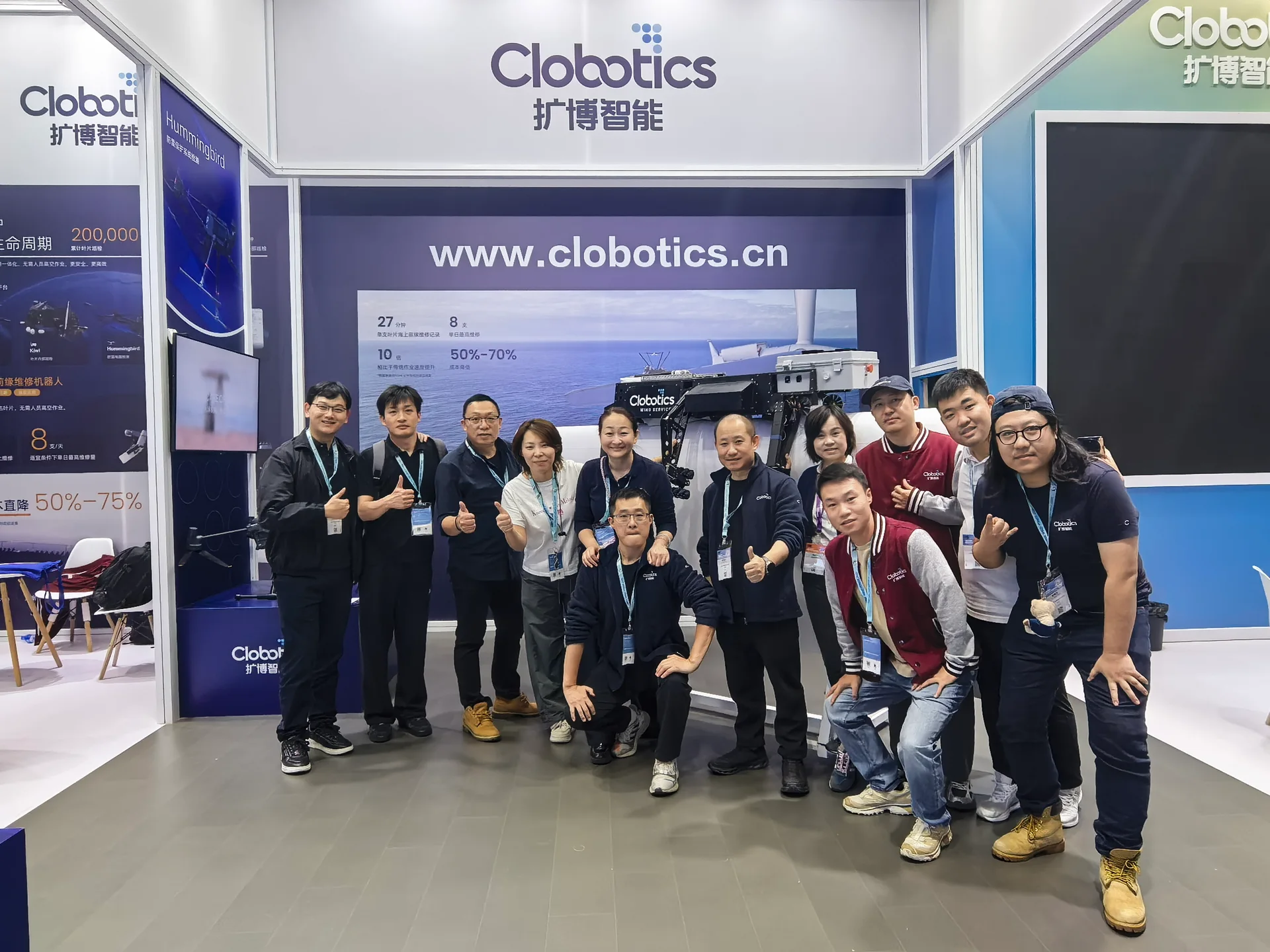
Clobotics presents its blade operations and maintenance workflow to asset owners and technical experts.
Clobotics’ autonomous drone system supports one-touch takeoff and can inspect the blades of a single turbine in 15 to 25 minutes. It uploads the data automatically for reporting. An autonomous robot inspects the blade interior, including areas inaccessible to technicians.
Hummingbird uses computer vision to help align the probe with each receptor and low-impedance test leads to measure resistance at milliohm resolution. It can test the receptors on all three blades in 30 minutes. The results are uploaded to Clobotics’ operations and maintenance platform, where operators can review them alongside external inspection, internal inspection, and repair records to inform maintenance decisions.
Clobotics works with operators at hundreds of wind farms worldwide, including sites in Denmark, Brazil, the United States, Canada, Vietnam, Thailand, Greece, Romania, Portugal, and Italy. Its field teams have completed a single-turbine inspection in as little as 15 minutes and inspected as many as 31 onshore turbines or 18 offshore turbines in a single day.