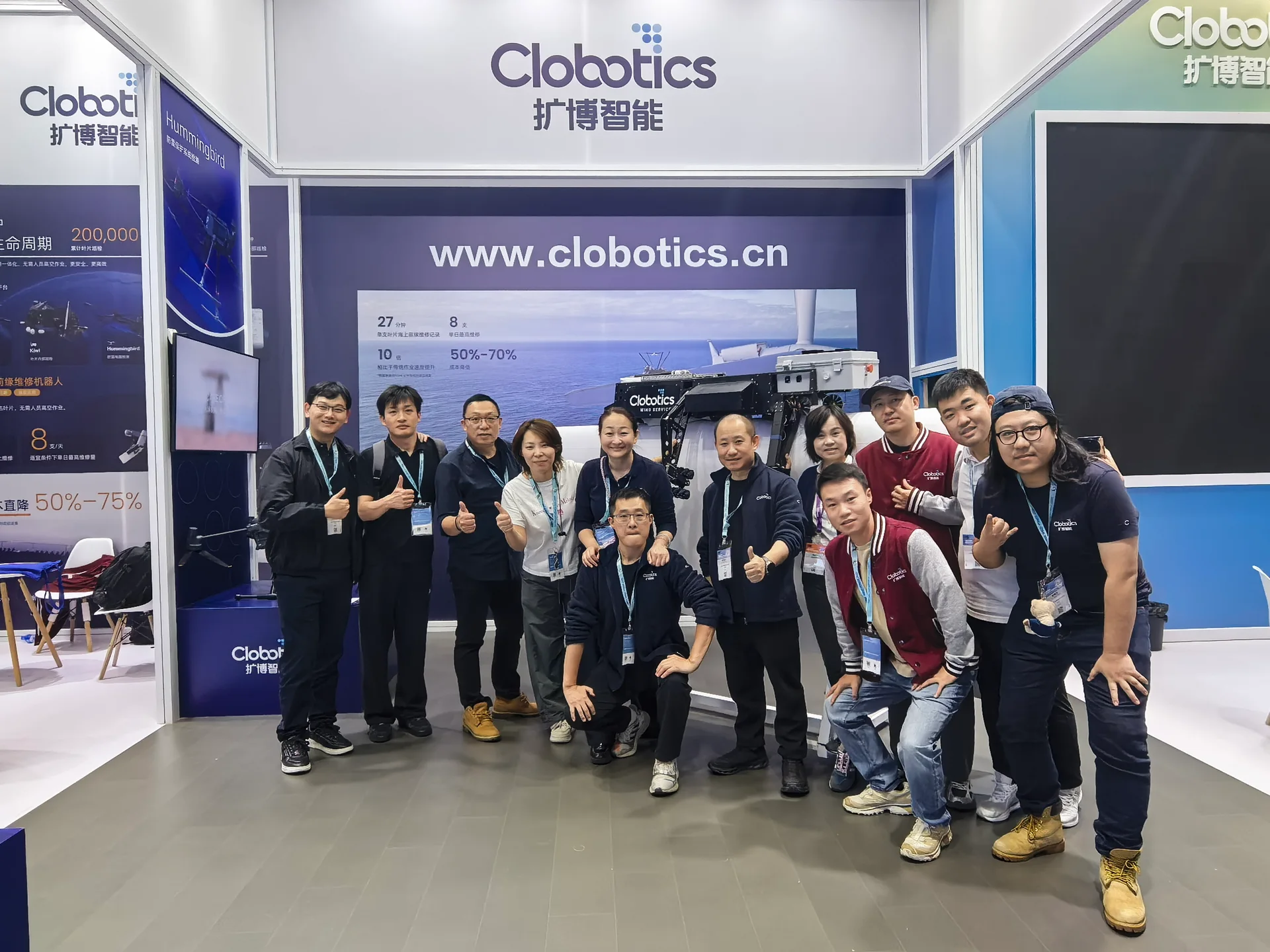
Beijing, October 19, 2026 — Clobotics showcased its Sparrow robotic leading-edge repair system and connected blade operations portfolio at China Wind Power 2026 (CWP 2026), held in Beijing from October 14 to 16.
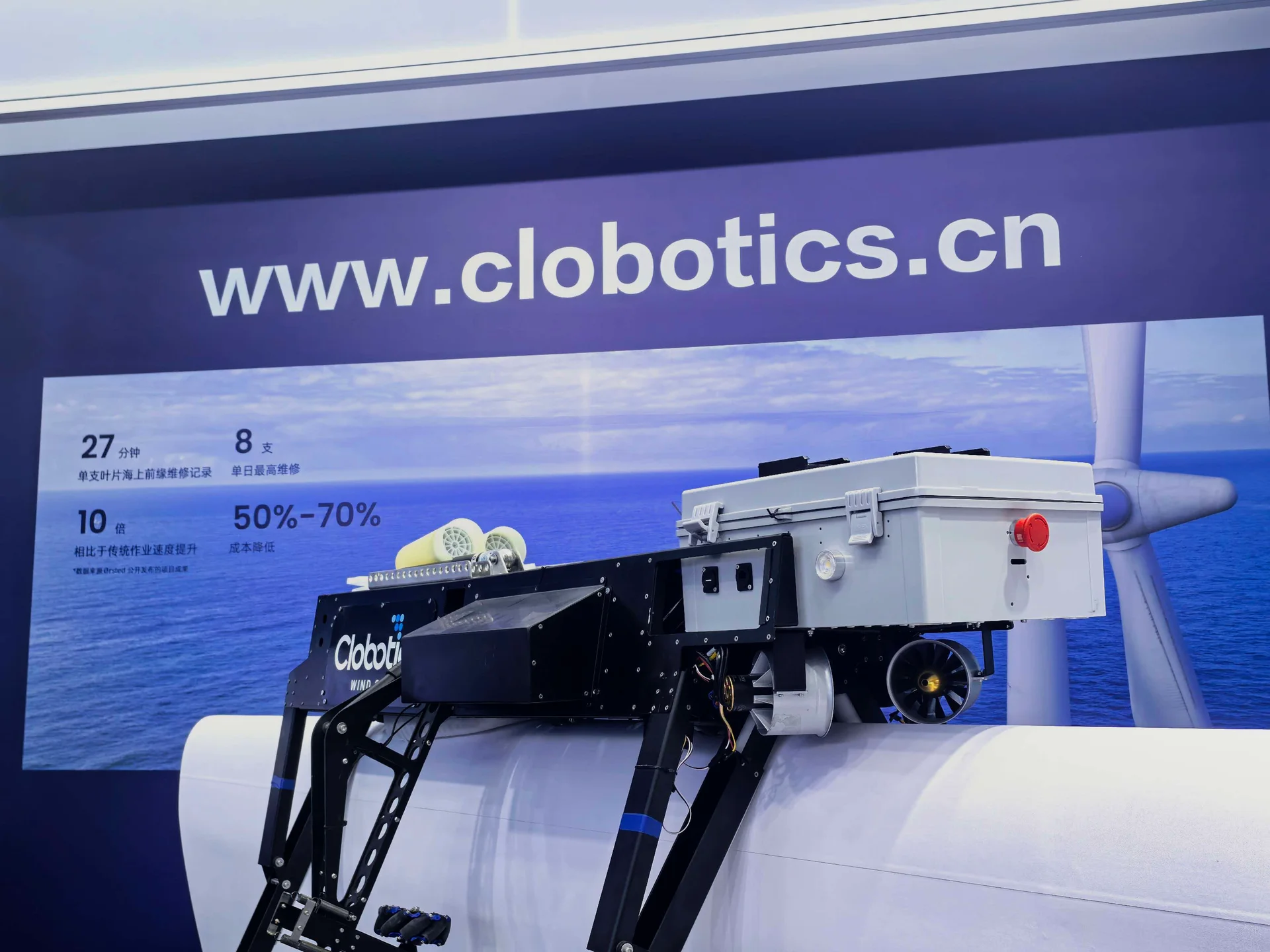
The exhibition marked Sparrow’s first full-scale public display in China. It also gave Clobotics an opportunity to show how autonomous inspection, robotic repair, and asset intelligence can work as one operating system rather than as separate tools.
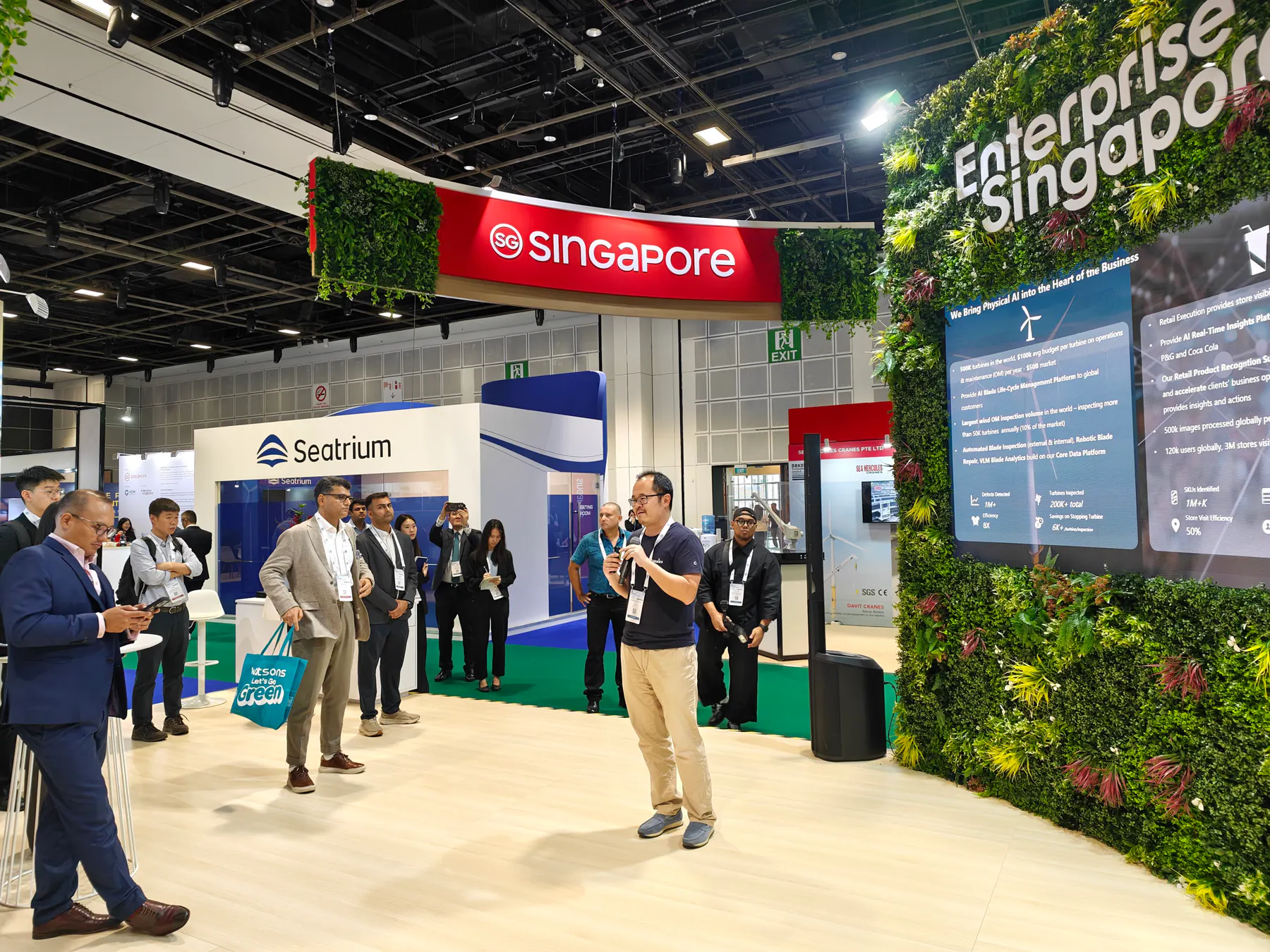
CWP 2026 brought together more than 1,000 companies from across the wind value chain. Alongside its exhibition, Clobotics contributed to the event’s Forum on Unmanned Wind Farm Inspection Equipment and Technology, where the company outlined a practical path toward safer and more scalable blade maintenance.
From rope access to robotic repair
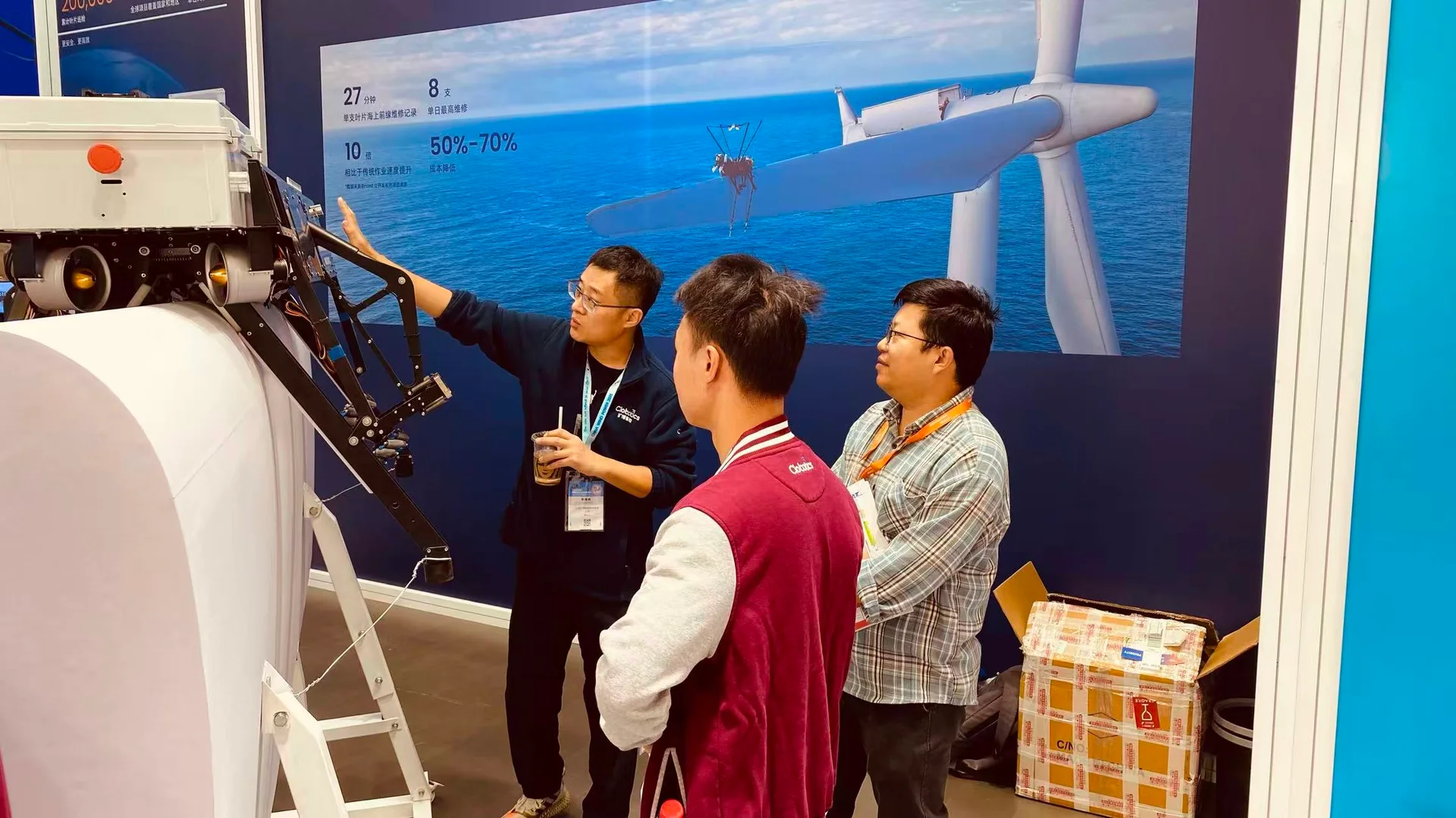
Sparrow is a remotely operated system designed to perform leading-edge repairs without placing technicians on the blade. Delivered by a heavy-lift drone and controlled from the ground or a vessel, the robot carries out repeatable surface preparation, cleaning, and coating application.
At CWP 2026, visitors could see the complete system at close range and discuss how it fits into commercial maintenance campaigns. The demonstration moved the conversation beyond the robot itself to the operating model behind it: identify damage, plan the intervention, complete the repair, and preserve the evidence in the turbine’s asset record.
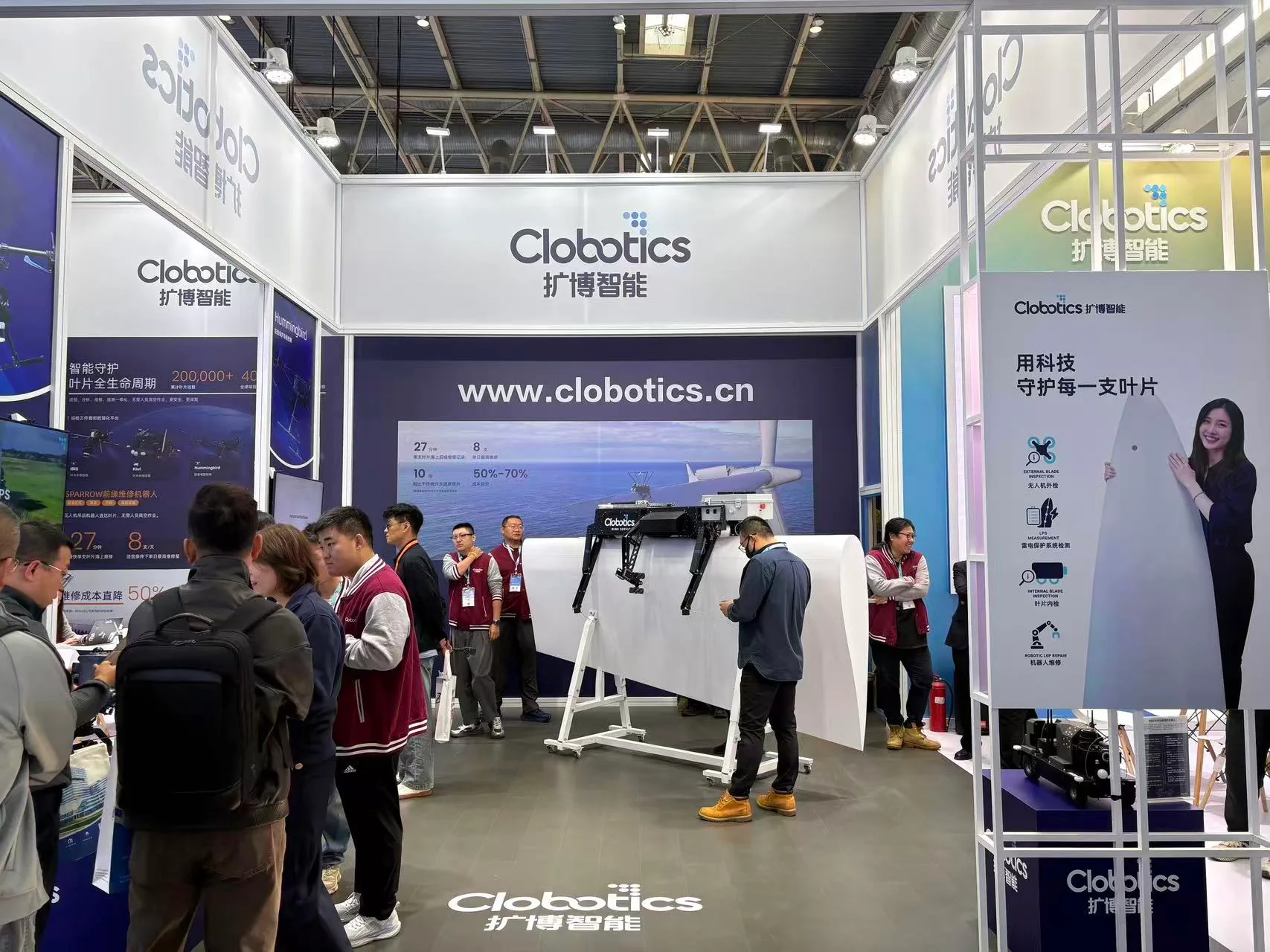
Sparrow arrived in Beijing with proven offshore results. During a commercial campaign with Ørsted at the Horns Rev 2 Offshore Wind Farm in Denmark, the system completed a repair in 27 minutes and repaired up to eight blades in one day under suitable operating conditions. The campaign also reported repair cost reductions of 50–75 percent compared with conventional methods. Read more about the record-setting Sparrow offshore repair campaign.
These results are important because offshore maintenance is constrained by weather windows, vessel availability, turbine downtime, and the risk of working at height. A faster, remotely operated repair process makes each campaign easier to plan while reducing personnel exposure and operational complexity.
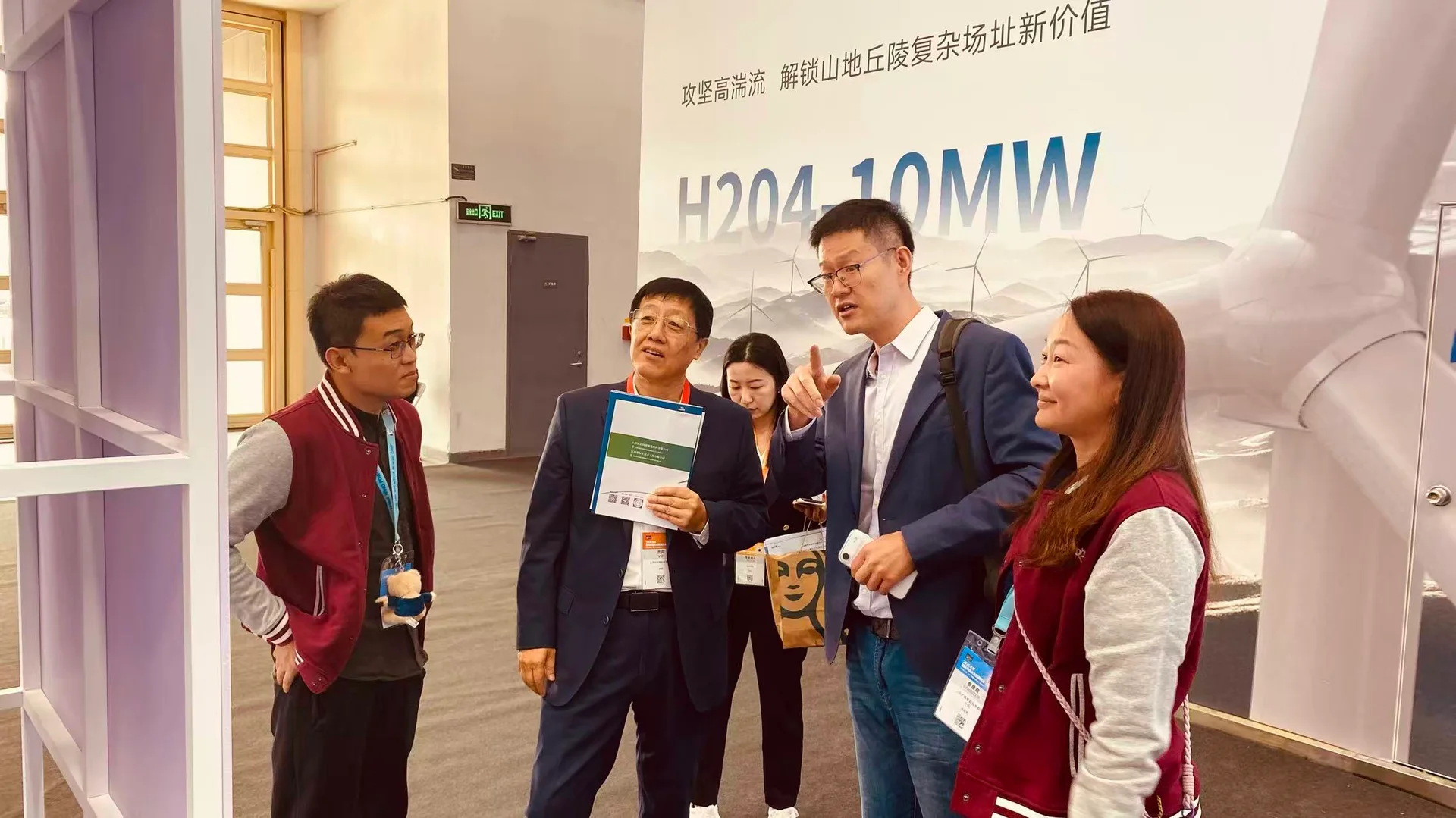
Goldwind Chairman and Chief Engineer Wu Gang was among the industry leaders and partners who visited the Clobotics booth. Discussions covered external and internal blade inspection, lightning protection system testing, robotic leading-edge repair, and the role of connected data in fleet maintenance.
A connected workflow for the blade lifecycle
At the forum on October 15, Clobotics Overseas Delivery Director Dan Wu presented A New Model for Autonomous Wind Turbine Blade Maintenance. The central point was straightforward: adding a drone to an existing process does not make the process autonomous. The workflow itself must be redesigned.
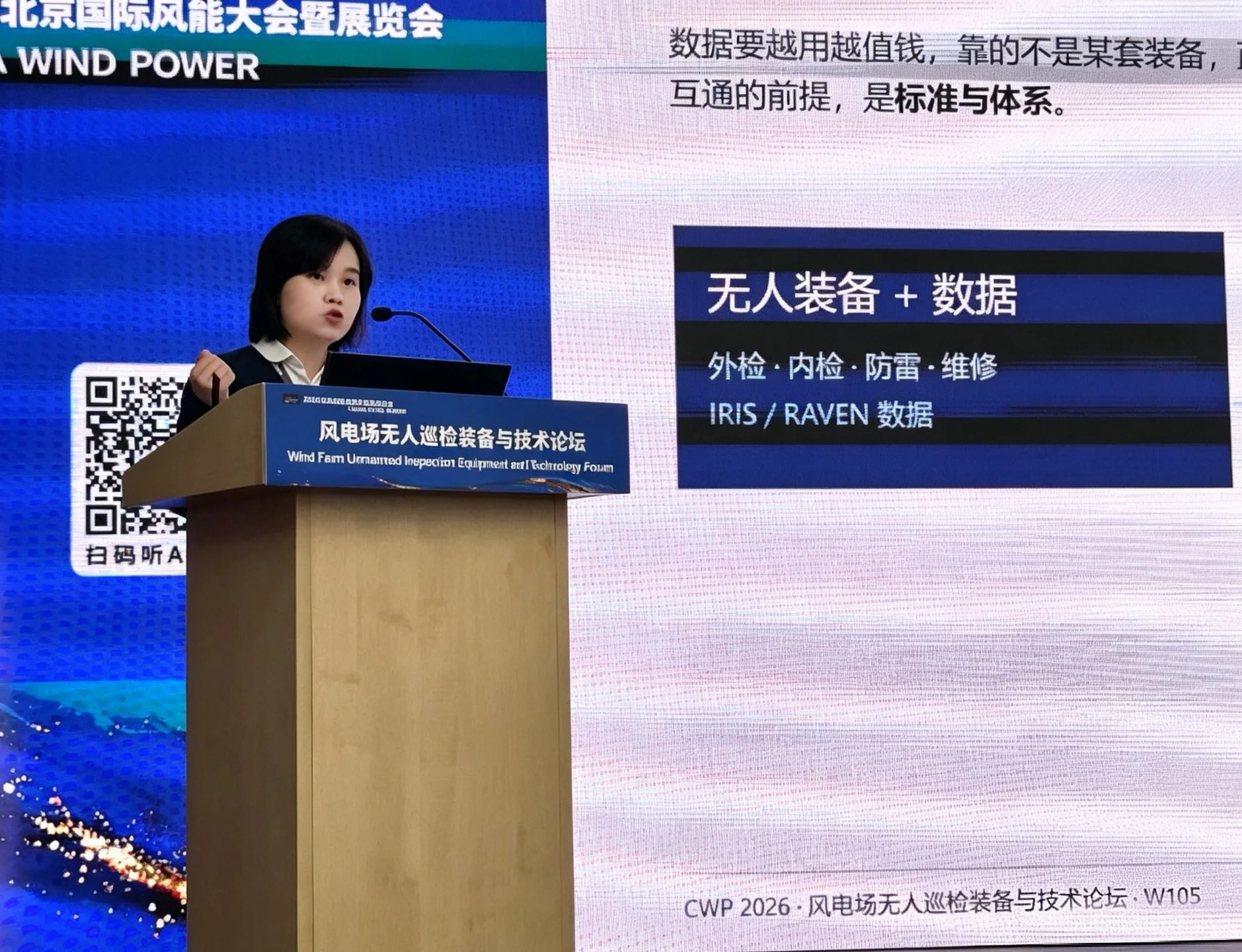
Wind operators often manage external inspection, internal inspection, lightning protection testing, and repair through separate teams and systems. That fragmentation makes it harder to maintain consistent evidence, compare findings over time, and move efficiently from a detected defect to a completed repair.
Clobotics connects four field systems across that lifecycle:
- IBIS captures repeatable external blade imagery through autonomous drone inspection.
- Kiwi documents internal blade conditions that cannot be assessed from the exterior.
- Hummingbird tests the lightning protection system from receptor to blade root.
- Sparrow carries the workflow from diagnosis into robotic leading-edge repair.
Data from these systems is consolidated in a shared asset record so that inspection findings, engineering decisions, repairs, and follow-up evidence remain connected to the same turbine. This is the same blade lifecycle approach Clobotics presented earlier in 2026 at RECHARGE Wind Power Summit Asia-Pacific.
The objective is not automation for its own sake. It is to give operators consistent evidence, a clear maintenance decision, and a repeatable way to execute the work across turbines and sites. For a closer look at how repeatable data is captured in the field, see How Autonomous Wind Turbine Blade Inspection Works.
Contributing field experience to industry standards
CWP 2026 also highlighted the industry’s work to establish common technical practices. A new white paper on drone-based wind turbine blade inspection was released during the event by a group of ten contributors, including China General Certification Center, DJI, CGN Hubei, Huaneng Clean Energy Research Institute, Longyuan Engineering Technology, China Three Gorges Onshore Energy, and Clobotics.
Clobotics contributed field experience to the publication, while its external inspection, internal inspection, and lightning protection testing projects were selected for an accompanying collection of unmanned wind farm inspection case studies.
Clobotics has now inspected more than 200,000 blades across over 40 countries and regions. That operating experience continues to shape the company’s technology: field evidence informs maintenance decisions, specialised equipment performs the work, and every intervention becomes part of a traceable asset history.
As turbines grow larger and blades become longer, the industry needs more than isolated equipment and reports. It needs a dependable path from detection to decision, repair, and verification. At CWP 2026, Clobotics demonstrated how that path can be built around connected data and robotic field execution.
To discuss a blade inspection, repair, or lifecycle management program, contact the Clobotics team.