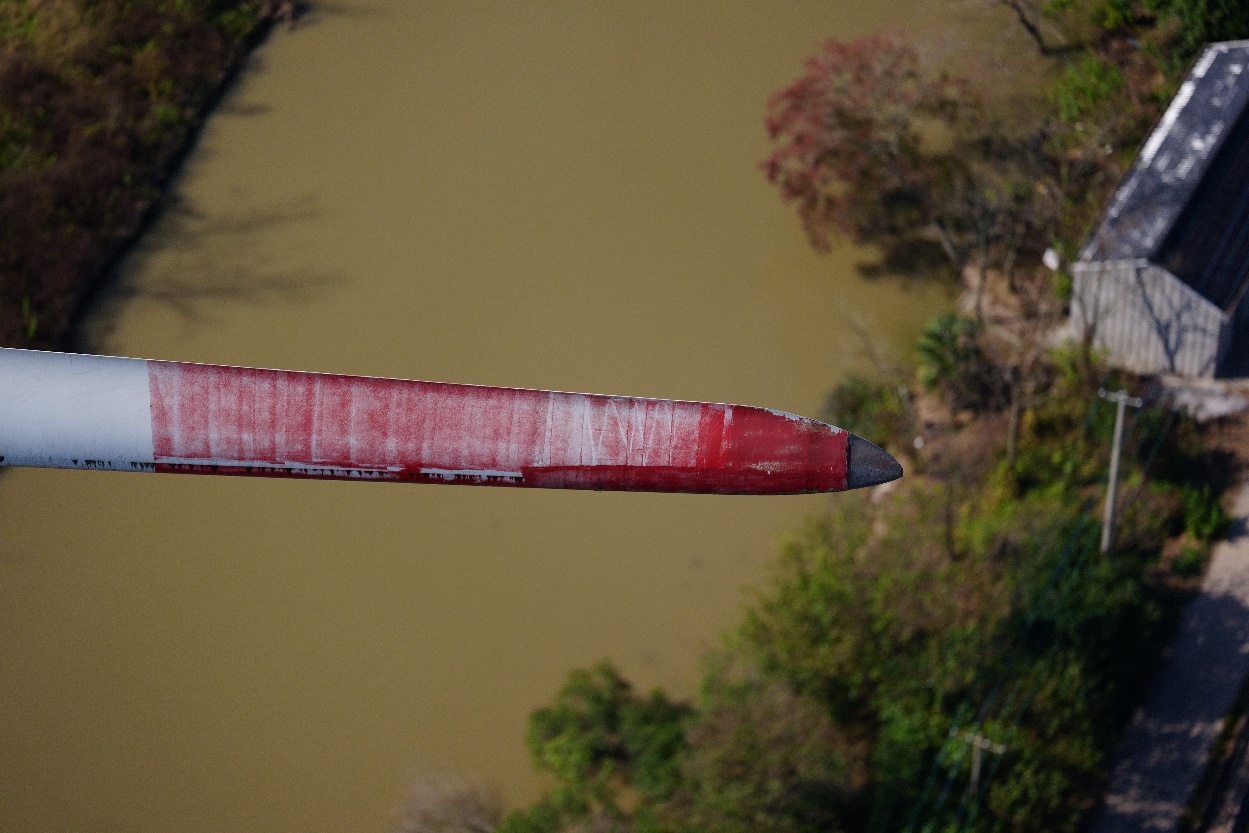
Wind turbine blades are exposed to rain, salt, lightning, temperature changes, erosion, fatigue, and repeated mechanical loads. A small defect can remain manageable when it is found early. The same defect can become a more expensive repair, a production risk, or a difficult access problem when it is discovered later.
That is the operating problem behind Wind Intelligence. It is not simply a drone, an image-recognition model, or a dashboard. Wind Intelligence is the connected system that turns inspection evidence into maintenance decisions across the blade lifecycle.
For wind farm owners, operators, and service providers, the practical question is not only whether a blade can be inspected. It is whether the inspection is repeatable, whether the data is trustworthy, whether the finding can be located and prioritized, and whether the resulting decision can be carried through to repair and documented for the future.
What does Wind Intelligence include?
Wind Intelligence connects five operating capabilities:
- External blade inspection: repeatable image capture across the blade surface.
- Internal blade inspection: evidence from areas that cannot be assessed from the outside.
- Lightning protection inspection: measurement and documentation of the lightning protection system.
- AI-assisted defect analysis: structured findings from large volumes of inspection imagery.
- Repair and asset intelligence: repair execution, maintenance planning, and a retained digital record for each blade.
The value comes from the connection between these capabilities. An external defect should not become an isolated image in a report. It should become a located finding with a severity, a maintenance implication, a recommended next step, and a record that can be compared with future inspections.
Why traditional inspection workflows create blind spots
Many wind O&M workflows separate data collection, engineering review, repair planning, and execution across different teams or vendors. That creates several practical problems:
- Inconsistent evidence: different crews may capture different areas, angles, or image quality from one campaign to the next.
- Slow review: engineers spend time sorting large image sets before they can focus on defects that affect maintenance priority.
- Weak location context: a defect described in a report is harder to track when it is not mapped precisely to a blade and turbine.
- Disconnected repair decisions: inspection findings may not flow cleanly into repair scope, scheduling, or verification.
- Lost history: when data is stored in separate reports, it becomes difficult to understand how a defect has changed over time.
These are operating-system problems, not just image-recognition problems. Better hardware helps, but the maintenance value depends on what happens to the evidence after it is collected.
The inspection layer: faster capture with repeatable evidence
Clobotics IBIS is designed for autonomous external blade inspection. It uses a customized drone platform together with Clobotics flight planning, flight control, image capture, and computer vision workflows. A full turbine inspection can be completed in approximately 15 minutes, depending on operating conditions and the inspection program.
The objective is not to collect the most images possible. It is to collect consistent, high-resolution evidence that can be processed and compared. Repeatability matters because wind operators often need to distinguish a new defect from an existing condition, evaluate whether erosion is progressing, and plan campaigns across many turbines.
External inspection is only one part of blade condition management. KIWI supports internal blade inspection, where laminate cracks, bondline damage, root-area issues, and other structural conditions may not be visible from the outside. HUMMINGBIRD adds lightning protection testing to the inspection workflow, helping teams document a part of blade health that is often treated separately.
Together, these systems help create a fuller picture of blade condition rather than relying on one external image set.
The intelligence layer: from images to maintenance findings
AI is useful in blade inspection when it reduces the time between image capture and a reliable engineering decision. Clobotics applies computer vision to classify blade imagery, segment the blade surface, identify potential defects, and organize findings for human review.
This matters at fleet scale. A single turbine inspection can contain hundreds of images. An AI pipeline can help clear images that do not show defects, highlight areas that need attention, and apply consistent labels across a campaign. Human reviewers remain important, especially for engineering interpretation and repair decisions, but they can spend more time on the evidence that requires judgment.
Clobotics reports that its blade classification model achieves 99% accuracy, segmentation 98% accuracy, and overall defect recall above 95%, with performance varying by defect type, image quality, and operating conditions. These figures should be evaluated alongside the inspection protocol, review process, and customer acceptance criteria rather than treated as a substitute for validation.
The data advantage also compounds over time. Clobotics reports blade inspection experience across 40+ countries and 180,000+ completed inspections. A broad real-world dataset helps models account for differences in blade designs, lighting, weather, surface conditions, defect appearance, and local operating environments.
The action layer: connecting findings to repair
Finding a defect is not the end of the workflow. Operators need to decide whether to monitor, inspect further, repair, or change the inspection cadence. That decision depends on location, severity, defect type, asset criticality, access conditions, and the expected impact of waiting.
SPARROW extends the workflow into robotic leading-edge protection repair. Deployed by heavy-lift drone, it is designed to reduce dependence on rope-access teams and expensive access equipment for suitable repair programs. Clobotics reports that SPARROW completed the world’s first offshore robotic blade repair in 2023, has since completed an offshore blade repair in 27 minutes, and can repair up to eight blades in one day under suitable operating conditions.
The important idea is continuity: inspection evidence can inform repair planning, and repair work can become part of the blade’s ongoing record. That makes it easier to verify what was repaired, when it was repaired, and what the next inspection should look for.
IRIS: the digital record for blade lifecycle management
IRIS is Clobotics’ cloud-based asset intelligence platform. It brings external inspection, internal inspection, lightning protection data, defect annotations, severity ratings, reports, and maintenance context into one workspace.
For an operator, a useful blade record should answer practical questions:
- Where exactly is the finding located?
- What type of defect was identified?
- How severe is it and how confident is the classification?
- Has the same area been inspected before?
- Is the finding progressing, stable, or already repaired?
- Which turbines or sites require attention first?
- Can the inspection and repair history be transferred with the asset?
This is where Wind Intelligence becomes more than a collection of tools. It creates a working history for the asset, allowing O&M teams to compare conditions across campaigns and prioritize work across a fleet rather than treating every report as a standalone document.
Predictive fleet health monitoring: what it should actually do
Predictive fleet health monitoring turns repeated condition evidence into a ranked inspection and maintenance plan across turbines. It should show which findings are new or progressing, where evidence is uncertain, which repairs require verification, and which assets need action before the next practical maintenance window.
The word predictive should not imply that images alone can forecast every blade failure. A useful fleet-health model combines several evidence layers:
| Evidence layer | Question it helps answer |
|---|---|
| Comparable inspection history | Is the condition new, stable, or progressing? |
| Defect location and mechanism | What type of consequence could the finding create? |
| Severity and reviewer confidence | How urgent is the finding, and how reliable is the evidence? |
| Repair and verification record | Was the condition addressed, and did the intervention hold? |
| Asset and site context | Which turbine model, age group, environment, or operating cohort is affected? |
| Access and maintenance constraints | When can follow-up realistically be completed? |
At portfolio level, this supports more useful questions than a simple defect count: Which blade cohorts show recurring leading-edge erosion? Which lightning findings still need continuity testing? Which repairs should be grouped into the next campaign? Which low-confidence observations justify targeted close inspection?
IRIS provides the asset structure for this work by retaining location-linked findings and inspection history across external inspection, internal inspection, LPS testing, and repair activity. The output is a transparent priority queue for engineers and planners—not an unexplained risk score.
How should operators evaluate a Wind Intelligence platform?
Before selecting a technology partner, wind operators should ask:
- Can the system inspect external, internal, and lightning protection conditions within one operating model?
- How repeatable is image capture across different turbine models, sites, weather conditions, and operators?
- How are AI findings validated, reviewed, corrected, and improved over time?
- Can findings be mapped precisely to the blade and compared with earlier inspections?
- Does the workflow support repair planning, verification, and future inspection history?
- Can the platform integrate with existing O&M, asset management, reporting, or data systems?
- Who owns the inspection data, and how long will the digital record remain accessible?
- What service, training, and support model is available after deployment?
The strongest evaluation is based on a complete workflow, not a single demo image. Ask the vendor to show how a real finding moves from field capture to AI review, engineering decision, repair action, and retained asset history.
The practical definition
Wind Intelligence is the operational layer between blade condition and maintenance action. It combines autonomous inspection, AI-assisted analysis, robotic repair, and asset intelligence so wind teams can make decisions with consistent evidence.
Clobotics applies this model across IBIS external inspection, KIWI internal inspection, HUMMINGBIRD lightning protection testing, SPARROW robotic repair, and IRIS asset intelligence. The goal is straightforward: detect issues earlier, understand their significance, plan the right response, and keep a reliable record of what happened across the blade lifecycle.
For more detail, see the Wind Intelligence and blade lifecycle platform, the Brazil blade inspection case study, and the Sparrow robotic blade repair perspective.