
Planogram compliance measures how closely the products, facings, positions, adjacency relationships, shelf allocation, and displays observed in a store match an approved planogram or execution rule set. The most useful programs turn each material exception into a prioritized field action and retain evidence of correction.
A planogram represents an intended shelf arrangement. Planogram execution is what stores actually deliver. Compliance connects the two by evaluating evidence from the physical shelf against the agreed standard.
For CPG and retail teams, the purpose is not to generate one abstract score. It is to understand which products, facings, positions, displays, and commercial rules are correct; which exceptions matter; and what can still be fixed in the store.
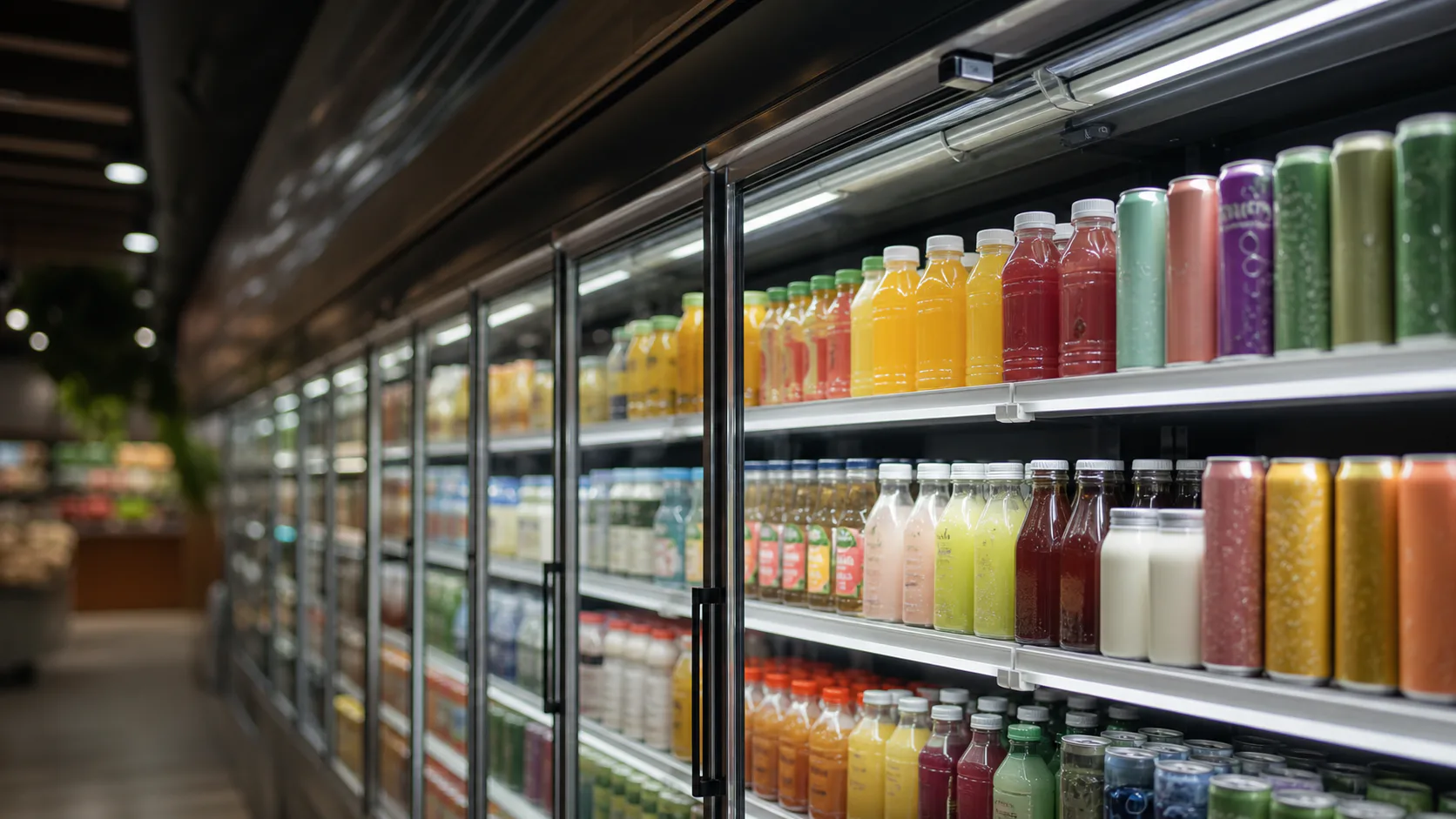
What should a planogram compliance program measure?
Planograms can encode several types of requirements. A meaningful audit should measure the rules that matter to the commercial program rather than treating every visual difference equally.
Product presence
Is each expected SKU present in the observed shelf area? Is an unauthorized or competitor product occupying an expected position?
Exact position
Does the SKU appear in the intended shelf, row, column, or slot? Exact position matters in strict layouts, but some channels use more flexible rules.
Facings
Does each product have the required number of shopper-facing units? A SKU can be present while still underperforming the plan because it has too few facings.
Adjacency
Are specified products, brands, sizes, or subcategories positioned next to one another in the expected sequence? Adjacency is important when the plan reflects shopper navigation or category logic.
Shelf allocation and share
Does the brand or category receive the agreed linear shelf space or share of shelf? This may require product dimensions, shelf geometry, and a stable measurement method.
Display and promotional requirements
Are secondary displays, endcaps, coolers, point-of-sale materials, price tags, promotional packs, and campaign assets present and positioned correctly?
How is planogram compliance calculated?
There is no universal formula. The score should reflect the agreed rules and the consequences of each exception.
A simple unweighted calculation is:
Compliance score = compliant checks ÷ applicable checks × 100
If a shelf has 20 applicable requirements and 17 pass, the simple compliance score is 85%.
However, enterprise programs often need weighted scoring:
Weighted compliance = achieved rule points ÷ total applicable rule points × 100
A missing priority SKU may carry more weight than a minor adjacency error. A promotion display may use pass/fail logic while facings use a proportional score. Some teams calculate separate presence, position, facing, adjacency, and display scores before combining them into an overall execution score.
The methodology should document:
- Which rules are applicable to each store.
- Whether the score is exact, weighted, proportional, or threshold-based.
- How missing or unreadable evidence is treated.
- Whether substitutions and flexible layouts are allowed.
- How promotions and temporary displays affect the reference.
- When human review can override an automated result.
Exact planograms vs. flexible execution rules
Not every retail environment should be evaluated with pixel-perfect matching.
Exact compliance
An exact planogram may specify the precise SKU sequence, shelf, position, adjacency, and number of facings. This model can suit controlled formats and categories where layouts are centrally managed.
Rule-based compliance
Flexible programs may specify minimum facings, required presence, brand blocks, shelf zones, adjacency, display type, or share thresholds without assigning every SKU to one fixed coordinate.
Score-based compliance
Some programs combine multiple rules into a perfect-store or execution score. This helps compare stores, but teams should retain the underlying exception detail so a representative knows what to fix.
Clobotics supports planogram and rule-based checks at multiple levels, including shelf, bay, row, and column. The workflow can be configured around precise matching, statistical logic, or score-based outputs depending on the program.
Why manual planogram audits are difficult to scale
Manual audits provide human context, but they also create operational variation:
- Representatives interpret rules differently.
- Counting facings and checking long shelves takes time.
- Dense assortments increase errors and fatigue.
- Store evidence may be incomplete or captured from inconsistent angles.
- Results may arrive after the representative has left.
- A single score may hide the exact exception.
- Headquarters cannot easily compare evidence across markets and time.
Manual review remains useful for ambiguous conditions and corrective work. AI is most valuable when it reduces repetitive recognition and rule checking while preserving human oversight for uncertainty.
How AI evaluates planogram compliance
1. Load the applicable reference
The workflow associates the store, channel, category, shelf, promotion, and effective date with the correct planogram or rule set. Using the wrong reference produces a confident but invalid score.
2. Capture and validate the shelf
Photos or guided video must cover the required shelf area with sufficient resolution. The system should check task context, image quality, overlap, completeness, and duplication.
3. Detect shelves and products
Computer vision identifies shelf structure, product regions, SKUs, facings, and selected shelf elements such as price tags or promotional material.
4. Reconstruct spatial relationships
The workflow organizes recognized products by shelf, row, sequence, position, and adjacency. Longer shelves may require multiple images or video frames to build a continuous view.
5. Apply compliance rules
The engine compares the observation with required presence, facings, position, adjacency, share, display, price, or promotional rules.
6. Handle uncertainty
Occluded, blurry, unfamiliar, or ambiguous items should not silently become noncompliance. Confidence thresholds and human review help separate uncertain evidence from verified exceptions.
7. Generate the result
The output should include the score, rule-level pass/fail status, annotated evidence, exception list, priority, and recommended action—not only a percentage.
From planogram exception to field task
A compliance program creates value when exceptions become specific, achievable actions.
Instead of sending a representative “Store 142 scored 74%,” the workflow can say:
- Restore two facings for the priority 500 ml SKU.
- Move the multipack next to the required product family.
- Remove the unauthorized competitor item from the agreed brand block.
- Add the missing promotional price tag.
- Verify the endcap display and capture completion evidence.
Tasks can be prioritized by product importance, promotion timing, sales opportunity, severity, retailer agreement, or repeated noncompliance. After correction, a new image can document closure.
What should a planogram report contain?
A useful enterprise report should make both management comparison and field correction possible.
- Store, banner, channel, market, visit, and capture time.
- Applicable planogram or rule-set version.
- Overall compliance score and component scores.
- Product presence and missing-SKU exceptions.
- Actual vs. required facings.
- Position and adjacency exceptions.
- Shelf allocation or share-of-shelf measures where required.
- Display, price, promotion, and POSM checks.
- Annotated shelf evidence.
- Confidence or review status.
- Priority and assigned corrective action.
- Completion evidence and resolution time.
- Trends by store, region, account, category, and campaign.
Common implementation limitations
- Wrong reference data: store-specific layouts and effective dates must be current.
- Packaging and assortment change: new SKUs and regional variants need controlled onboarding.
- Partial coverage: a cropped image cannot prove compliance for an entire bay.
- Occlusion and stacking: products may be visible only partially or in nonstandard orientations.
- Flexible store conditions: local constraints may make an exact plan impossible.
- Temporary shopper disruption: a shelf can change between capture and correction.
- Unclear ownership: a detected exception needs a team authorized to fix it.
- Score fixation: improving the aggregate score should not obscure high-value individual issues.
Planogram implementation checklist
Before the pilot
- Define the commercial problem and required response time.
- Select representative stores, formats, categories, and shelf conditions.
- Confirm planogram ownership, versions, and effective dates.
- Define exact, flexible, weighted, and non-applicable rules.
- Agree the measurement unit for facings, space, and share.
- Define evidence-quality and coverage requirements.
During the pilot
- Test difficult packaging, multipacks, stacking, glare, occlusion, and local variants.
- Compare automated results with reviewed ground truth.
- Measure exception precision and review rate, not only SKU recognition.
- Test whether field teams understand and can complete the generated tasks.
- Record how quickly results and corrections move through the workflow.
Before scaling
- Establish new-SKU and master-data governance.
- Integrate the required field, BI, API, and reporting systems.
- Train users on capture and exception handling.
- Define escalation for repeated or high-value noncompliance.
- Monitor performance by category, market, device, and capture method.
- Retain evidence and rule versions for auditability.
Clobotics planogram and retail execution workflows
Clobotics converts store photos and guided video into structured evidence for product presence, facings, shelf space, planogram rules, price tags, promotions, and competitor placement. Findings can be organized into store-level priorities for field teams and aggregated for regional or headquarters reporting.
Explore:
- Retail Execution Verification
- What Is Shelf Intelligence?
- How Retail Product Recognition Works
- How to Choose a Retail Execution Platform
- Walmart China store-wide retail intelligence
- Global beverage retail execution case study
Frequently asked questions
What is a planogram audit?
A planogram audit compares observed shelf evidence with an approved planogram or execution rule set to identify presence, facing, position, adjacency, space, display, and promotional exceptions.
What is a good planogram compliance score?
There is no universal threshold. The target depends on category, channel, scoring method, commercial agreement, evidence quality, and the importance of individual rules. Teams should evaluate material exceptions as well as the aggregate score.
Can AI measure exact product position?
Yes, when the evidence, reference data, shelf reconstruction, and recognition quality support that level of precision. Flexible environments may be better evaluated with shelf-, row-, zone-, or rule-based compliance.
How does AI count facings?
Computer vision detects visible product instances and associates them with SKUs and shelf structure. The system then applies the agreed facing definition, including rules for stacked items, multipacks, partial visibility, and orientation.
Is product presence enough to prove compliance?
No. A product may be present but have too few facings, the wrong position, incorrect adjacency, weak shelf allocation, or missing promotional support.
How often should planogram compliance be measured?
Frequency should follow the value and volatility of the category, promotion schedule, visit model, store format, and cost of noncompliance. Some programs audit during field visits; connected systems can observe selected zones more frequently.